Category: Analysis and Opinion / News Items


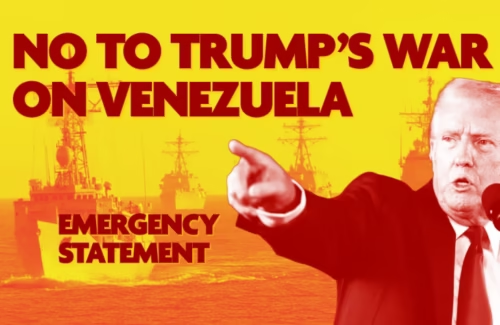
  • ‘Absolute Dereliction of Duty’: House Republicans Kill Venezuela War Powers Resolutions

    ‘Absolute Dereliction of Duty’: House Republicans Kill Venezuela War Powers Resolutions

    Undeterred, members of the Congressional Progressive Caucus vowed to “continue to fight to stop Trump’s illegal war on Venezuela.”

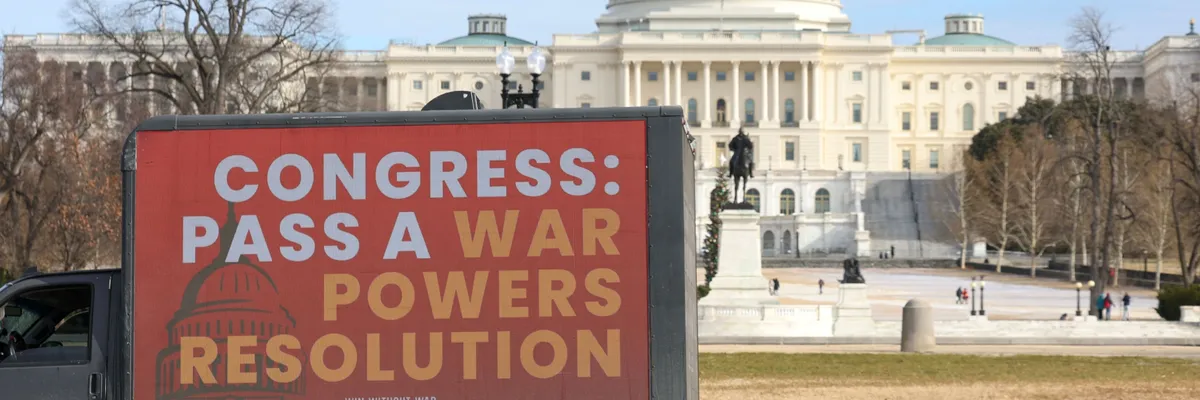
    Win Without War Mobile Billboard Urges Congress To Support War Powers Resolutions To Prevent Trump Administration From Launching Military Interventions

    A mobile billboard sponsored by Win Without War urging members of Congress to pass a war powers resolution is seen outside the US Capitol in Washington, DC on December 15, 2025. (Photo by Tasos Katopodis/Getty Images for Win Without War)

    Kill Venezuela War Powers Resolutions

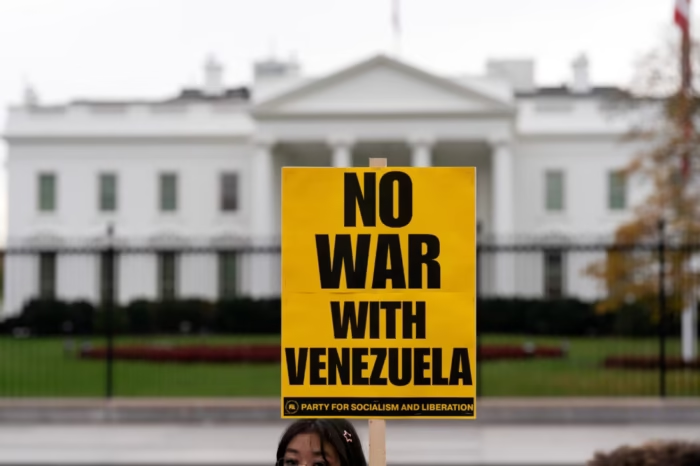
    House Republicans on Wednesday defeated a pair of war powers resolutions aimed at reining in US President Donald Trump’s airstrikes on alleged drug-running boats in the Caribbean Sea and Pacific Ocean and his increasingly aggressive provocations that critics fear are leading to a war on Venezuela.

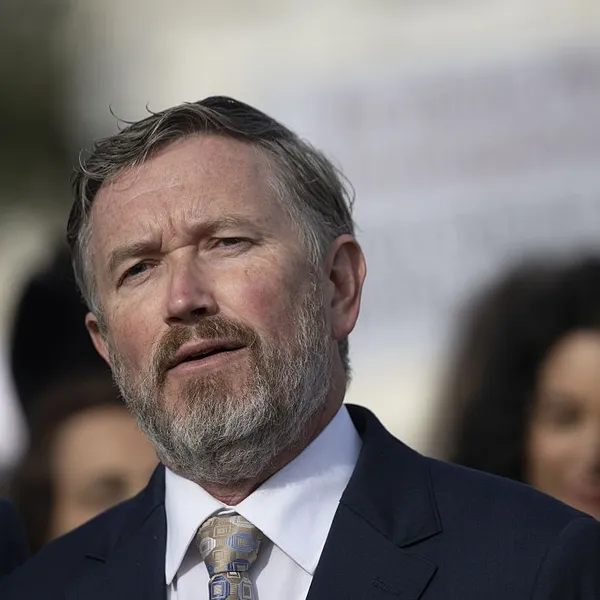
    The first resolution, introduced by Rep. Gregory Meeks (D-NY), demanded that the US refrain from armed hostilities “with any presidentially designated terrorist organization in the Western Hemisphere, unless authorized by a declaration of war or a specific congressional authorization for use of military force.”

    Trump dubiously designated drug cartels—including the Venezuela-based group Tren de Aragua—as foreign terrorist organizations in an executive order signed on his first day back in the White House.

    The resolution was defeated 210-216, with seven lawmakers not voting. Two Republicans—Reps. Don Bacon of Nebraska and Thomas Massie of Kentucky—voted in favor of the measure. Democratic Texas Reps. Henry Cuellar and Vicente Gonzalez joined their GOP colleagues in voting down the proposal.

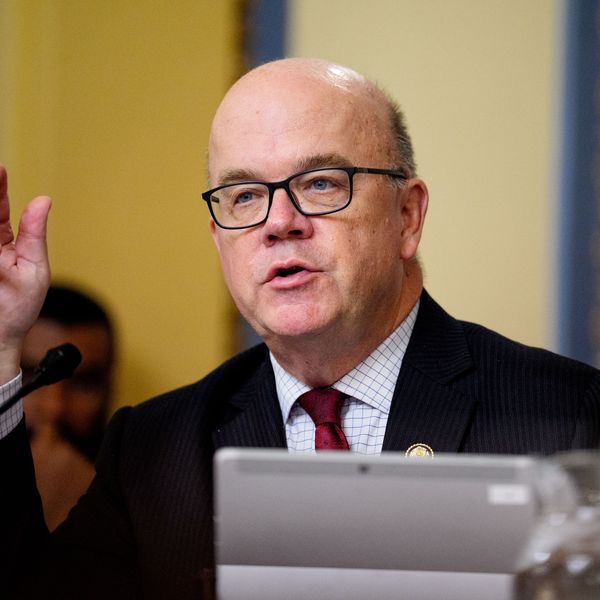
    The second resolution, introduced by Rep. Jim McGovern (D-Mass.), would have directed Trump to “remove the use of United States armed forces from hostilities within or against Venezuela, unless explicitly authorized by a declaration of war or specific statutory authorization for use of military force.”

    The resolution failed by a vote of 211-213, with nine members not voting. Republicans Bacon, Massie, and Rep. Marjorie Taylor Greene of Georgia voted “yes” on the legislation, while Cuellar voted against the proposal.

    “The Trump administration’s ongoing lethal US military strikes on alleged drug boats in the Western Hemisphere are legally questionable, and ineffective,” Meeks and Reps. Adam Smith (D-Wash.), Jim Himes (D-Conn.), Bennie Thompson (D-Miss.), Jason Crow (D-Colo.), and Ilhan Omar (D-Minn.)—all members of the House Foreign Affairs Committee—said in a statement following the vote.

    “Under existing US law, these vessels could have been interdicted and their occupants subjected to judicial process,” the lawmakers noted. “Instead of pursuing prosecutions, this administration has deliberately avoided judicial scrutiny by conducting lethal strikes, repatriating survivors, and in at least one instance, carrying out a second strike on defenseless persons.”

    The Democrats continued:

    The president has failed to demonstrate the necessary authority under US or international law to conduct lethal military strikes on these boats. No one can credibly claim that these vessels, in some cases not even traveling to the United States and located thousands of miles from US soil, posed an imminent threat to the American people warranting the use of military force. Our war powers resolution sought to terminate these extrajudicial strikes, yet most Republicans chose loyalty to Donald Trump over their oath to the Constitution. By not reining in Trump’s gross abuse of power, they are sending a dangerous signal that any president can unilaterally commit US armed forces to hostilities without congressional authorization. We hope our Republican colleagues find their courage in the face of President Trump’s threats to expand this military operation into Venezuela. Should he be allowed to do so, he will no doubt provoke another forever war that the American people do not support and Congress has certainly not authorized.

    The House votes follow two failed Senate attempts to stop Trump from continuing military action against alleged drug cartels without congressional approval. A vote on a war powers resolution introduced earlier this month by Senate Minority Leader Chuck Schumer (D-NY) and Sens. Tim Kaine (D-Va.), Rand Paul (R-Ky.), and Adam Schiff (D-Calif.) is expected this week. Meanwhile, Sen. Ruben Gallego (D-Ariz.) on Monday announced a separate resolution to stop US forces from launching more boat strikes.

    Wednesday’s votes came after Trump escalated US aggression toward Venezuela by ordering a “total and complete blockade” on “all sanctioned oil tankers” approaching and leaving the South American country. In a social media post divorced from historical fact, Trump accused Venezuela of stealing “oil, land, and other assets” from the United States.

    This, after Trump’s deployment of an armada of warships and thousands of troops to the southern Caribbean, his authorization of CIA covert action against the government of Venezuelan President Nicolás Maduro, and his threats of a land invasion of Venezuela. Most of the at least 95 people killed in the more than two dozen US strikes on boats allegedly transporting drugs have also been Venezuelans.

    Undeterred by Wednesday’s votes, members of the Congressional Progressive Caucus (CPC) vowed to “continue to fight to stop Trump’s illegal war on Venezuela.”

    “Tonight’s razor-thin, 211-to-213 vote on the bipartisan war powers resolution to end these illegal hostilities puts Trump on notice,” Omar, the deputy CPC chair, said in a statement.

    Omar continued:

    Nearly a quarter-century ago, the American people were misled by a lawless president promoting lies about weapons of mass destruction, all to invade an oil-rich country that posed no threat to us. The result was a disaster that killed thousands of American service members, triggered a humanitarian crisis in Iraq, and destabilized the entire region. Trump is pursuing the same course today in Venezuela, absurdly designating fentanyl a WMD while blockading Venezuela until the country gives him “all of the Oil, Land, and other Assets.”

    “Trump has no mandate to push his unconstitutional military campaign against Venezuela,” Omar added. “If Trump continues to carry out oil tanker seizures, impose a naval blockade, and put American service members in harm’s way for an illegal regime change war, he can surely expect a vote to immediately stop this disastrous conflict.”


    Rise Up Times is entirely reader supported.
    In this critical time in hearing the voices of truth is all the more important although censorship and attacks on truth-tellers are common. Support WingsofChange.me as we bring you important articles and journalism beyond the mainstream corporate media on the Wings of Change website and Rise Up Times on social media  Access is alway free, but if you would like to help:
    A donation of $25 or whatever you can donate will bring you articles and opinions from independent websites, writers, and journalists as well as a blog with the opinions and creative contributions by myself and others

    Sue Ann Martinson, Editor Wings of Change

  • Patrick Lawrence: Zionism on the Upper East Side

    Patrick Lawrence: Zionism on the Upper East Side

    The organization Park East sponsored, Nefesh B’Nefesh, also assists American Jews who wish to emigrate to Israeli settlements in the Occupied Territories. This is a legal matter and as such not inconsequential.


    Zionism on the Upper East Side

    By Patrick Lawrence / Consortium News / December 4, 2025

    Park East Synagogue, New York. (Gryffindor/Wikimedia Commons)

    We watch in horror from afar as the Zionist terror state continues its genocide against the people of Gaza and escalates its slower-motion, lower-technology genocide against the 3 million Palestinians who reside in East Jerusalem and the West Bank, otherwise known as the Occupied Territories — illegally occupied, of course.

    As a few Israeli commentators have pointed out — those few who guard their integrity— the operative principle here is the limitless impunity the Western powers have long granted “the Jewish state.”

    This is the outcome, they say, when a people given to a culture of vengeance are told they will never suffer consequences however barbaric their conduct toward others, however many laws they break, however many their assassinations, however many their torture victims, however many exploding telephones they plant among civilian populations, etc.

    Maybe we need no reminders, maybe we do, that this presumption of impunity is not bound by sovereign borders and is not limited to the cowardly, condemnable savagery of apartheid Israel in Gaza and the West Bank. But we had one last week, and it is well we consider it carefully.

    Zohran Mamdani, the principled social democrat who is New York’s mayor-elect, is now under attack from Zionist Americans who insist Zionist Americans are above the law — American law and international law. You may look well on Mamdani and you may not, but as he is besieged by these objectionable people, so are we all.

    This story begins on Wednesday, Nov. 19, at Park East Synagogue, a grand edifice that sits on East 67th Street between Third and Lexington Avenues in the Lenox Hill section of Manhattan.

    Park East has been serving Modern Orthodox Jews since 1890. Its congregation, to be noted, is comprised of the great and good of the Upper East Side. These are observant but assimilated Jews, thoroughly plugged into, let’s say, secular public space.

    Except.

    Two Wednesdays back Park East hosted an organization dedicated to encouraging Jews to “make Aliyah,” the Hebrew term for emigrating to “the Promised Land.” O.K., you cannot find anything legally wrong in this, although it is unambiguously a moral wrong in that it expresses support for a genocidal state.

    But let us set aside the moral question for now. The organization Park East sponsored, Nefesh B’Nefesh, also assists American Jews who wish to emigrate to Israeli settlements in the Occupied Territories. This is a legal matter and as such not inconsequential.

    American Settlers

    Statistics on the settler population in the West Bank and East Jerusalem are hard to nail down (and I can easily imagine why). The Times of Israel reported eight years ago that some 60,000 Americans were among the Jewish settlers in the West Bank.

    That was roughly 15 percent of the settler population then — not counting the considerable number residing in East Jerusalem. We have no precise figures now, but these populations — settlers and Americans among the settlers — are both higher.

    As has been well-reported, and well-recorded in several documentaries, the Americans among the West Bank settlers are frequently the most violent in their incessant attacks on Palestinians. They have also been at times the most readily inclined to murder.

    There is the infamous case of Baruch Goldstein, a freakshow Zionist from Brooklyn who killed 29 Palestinians when he attacked the Ibrahimi Mosque (tomb of Abraham and other patriarchs) in Hebron in 1994. Goldstein was not singular: He was and remains exemplary — and a hero among some Zionists. National Security Minister Ben Givr had a picture of Goldstein on his living room wall until 2020.

    I cannot name the precise statutes applicable here, but they must be several. Open and shut, just the facts, Ma’am, Nefesh B’Nefesh is an accomplice to the settler movement.

    Most immediately significant in the Park East case, Nefesh B’Nefesh — this translates as “soul to soul,” and who knows what that is all about — is directly implicated in the settlers’ breach of international law given that all the settlements in the West Bank and East Jerusalem are illegal according to said law.

    There was no claiming surprise that blustery Nov. 19th when a group of roughly 200 vociferous demonstrators gathered in front of Park East to protest the promotional seminar Nefesh B’Nefesh was running that day.

    “Death to the IDF” was among the tamer of various chants; others encouraged violence against settlers. “It is our duty,” one leader of the demonstration said measuredly to those assembled, “to make them think twice before holding these events.”

    Inside the Park East building, people indirectly but unmistakably promoting violence against Palestinians, land theft and all the rest. And on East 67th Street, righteous indignation, anger in behalf of a persecuted people, some violent rhetoric, but no violence.

    It was obvious the mayor-elect would have to intervene. The event itself warranted this, and various Zionist constituencies, as well-reported before and since Mamdani’s election, have been attacking him as a radical jihadist, an anti–Semite and who knows what else, so attempting to poison his relations with New York’s Jewish community.

    Here is the ever-poised Mamdani’s day-after statement, his first on the incident:

    “The mayor-elect has discouraged the use of language used at last night’s protest and will continue to do so. He believes every New Yorker should be free to enter a house of worship without intimidation and that these sacred spaces should not be used to promote activities in violation of international law.”

    A few days later, storms of protest from Zionist quarters having instantly erupted, Mamdani sent this statement to The New York Times:

    “We will protect New Yorkers’ First Amendment rights while making clear that nothing can justify language calling for ‘death to’ anyone. It is unacceptable, full stop.”

    I find these statements a little in the way of Solomon in their discernment, in Mamdani’s determination not to tilt his hand and to articulate the core truth of the matter:

    The more extreme language out on East 67th Street was wrong so far as it intimidated synagogue goers, but the principle of free speech is nonetheless to be honored; those encouraging breaches of international law are wrong, and a synagogue should not be used to promote illegalities.

    ‘A Hateful Mob’

    Maybe what has come back at Mamdani in the course of all this was predictable, more-of-the-same babble. “Mob” was the de rigueur term among those responding to the mayor-elect’s response.

    The demonstrators were “a hateful mob of anti–Israel protesters,” the New York Post reported, and it got worse from there. Mamdani sided with “an anti–Semitic mob,” eJP, or eJewishphilanthropy.com, declared. “Last week,” this outfit continued, “Mayor-elect Zohran Mamdani failed the first test of his promise to protect all New Yorkers.”

    And from William Daroff, the chief exec of the Conference of Presidents of Major American Jewish Organizations: “We are still judging him, and I’d say that at the moment he’s got a failing grade.”

    They sitteth in judgment, you see.

    O.K., we have heard all this before in one or another context, so has Mamdani. He is surely in for more of same once he assumes office Jan. 1. But we ought not miss the very much larger matters raised by the Park East incident.

    There is the First Amendment question, as Mamdani correctly noted, and there are the legal questions as pencil-sketched above. These are related at the not-too-distant horizon.

    People speaking for Nefesh B’Nefesh now deny they promote emigration to West Bank settlements — which, as the group’s website attests, is simply not true. It advertises Gush Etzion, an expanding sprawl of 22–and-counting settlements south of Jerusalem, Ma`ale Adumim, whose location makes it key to the Israelis final takeover of the West Bank, and various others.

    “Teaching about Aliyah and Zionism belongs in that space”: This is the aforementioned William Daroff. And from eJP again: “Mamdani condemned the synagogue’s choice of programming.”

    Choice of programming.

    You see what is going on here. Park East and Nefesh B’Nefesh are encouraging Americans to breach international law. And absolutely to a one, those defending the synagogue and the event-organizer do so by pretending this is not what is most pithily at issue.

    “We are deeply concerned by, and firmly condemn, the violent rhetoric and aggressive behavior that took place outside of the Park East Synagogue,” Nefesh B’Nefesh now declares on its website. Violent rhetoric and aggressive behavior on East 67th Street but not in the West Bank or in East Jerusalem.

    To go straight to the point, this is another assertion of Zionist impunity. And we should understand what has lately transpired in New York as a very, very direct extension of the impunity that encourages and also protects the Israeli terror machine in Gaza and the West Bank. Impunity: It is a blight under which Palestinians suffer, and none of us is immune to it.

    To put this another way, we witness an especially insidious case of chutzpah, the dangers of which I have considered elsewhereYou have your laws, the world has its, and we will ignore them before your eyes (and ostracize you as an anti–Semite if you object). This, in a sentence, is what Zionists now insist we must accept.

    I do not know what I would have chanted were I among the 200 outside Park East Synagogue the evening of Nov. 19.

    I know what I would have wanted to hear from those inside: I would have wanted every right-thinking congregant at Park East to emerge denouncing Zionism as a blight on the splendor of Judaism’s authentic traditions — this and loud denunciation of all that Israel’s impunity licenses it to do more or less everywhere.

    Patrick Lawrence, a correspondent abroad for many years, chiefly for the International Herald Tribune, is a media critic, essayist, author and lecturer. His new book, Journalists and Their Shadows, is out now from Clarity Press. His website is Patrick Lawrence. Support his work via his Patreon site.

    Author Site


    Rise Up Times is entirely reader supported.
    In this critical time in hearing the voices of truth is all the more important although censorship and attacks on truth-tellers are common. Support WingsofChange.me as we bring you important articles and journalism beyond the mainstream corporate media on the Wings of Change website and Rise Up Times on social media  Access is alway free, but if you would like to help:
    A donation of $25 or whatever you can donate will bring you articles and opinions from independent websites, writers, and journalists as well as a blog with the opinions and creative contributions by myself and others

    Sue Ann Martinson, Editor Wings of Change


  • DN! “Divorced from Reality”: Economist Dean Baker Fact-Checks Trump’s Speech on the Economy

    DN! “Divorced from Reality”: Economist Dean Baker Fact-Checks Trump’s Speech on the Economy

    How Globalization and Rules of the Modern Economy Were Structured to Make the Rich Richer, by Dean Baker (book cover)

    AMY GOODMAN: We begin today’s show looking at President Trump’s primetime address on Wednesday night. There was widespread speculation that Trump would use the speech to announce military action against Venezuela, but instead, the 18-minute speech focused largely on domestic issues, including the economy and healthcare.

    President Trump praised the state of the U.S. economy in a primetime address Wednesday evening, even though new government statistics show the nation’s unemployment rate is at a new four-year high of 4.6%. IMPEACHDean Baker, senior economist at the Center for Economic and Policy Research, says Trump’s aides should be “wondering about the man’s sanity” after Wednesday’s speech. “This is utterly divorced from reality.” Though Trump blames former President Biden for the poor economy, Baker notes that Trump had inherited an “incredibly strong economy by almost every measure imaginable.”

    “Divorced from Reality”: Economist Dean Baker Fact-Checks Trump’s Speech on the Economy

    Transcript
    This is a rush transcript. Copy may not be in its final form.

    This is how Trump began his speech from the White House.

    PRESIDENT DONALD TRUMP: Eleven months ago, I inherited a mess, and I’m fixing it. When I took office, inflation was the worst in 48 years, and some would say in the history of our country, which caused prices to be higher than ever before, making life unaffordable for millions and millions of Americans. This happened during a Democrat administration, and it’s when we first began hearing the word “affordability.”

    Our border was open, and because of this, our country was being invaded by an army of 25 million people, many who came from prisons and jails, mental institutions and insane asylums. They were drug dealers, gang members, and even 11,888 murderers, more than 50% of whom killed more than one person. This is what the Biden administration allowed to happen to our country, and it can never be allowed to happen again.

    AMY GOODMAN: Standing between two Christmas trees, President Trump went on to praise the state of the U.S. economy, even though new government statistics show the nation’s unemployment rate is at a new four-year high of 4.6%.

    PRESIDENT DONALD TRUMP: We’re doing what nobody thought was even possible, not even remotely possible. There has never, frankly, been anything like it. One year ago, our country was dead. We were absolutely dead. Our country was ready to fail, totally fail. Now we’re the hottest country anywhere in the world. And that’s said by every single leader that I’ve spoken to over the last five months.

    Next year, you will also see the results of the largest tax cuts in American history, that were really accomplished through our great Big Beautiful Bill, perhaps the most sweeping legislation ever passed in Congress.

    AMY GOODMAN: To talk more about Trump’s speech, what some called an “18-minute shout,” and also talk about the state of the economy, we’re joined by Dean Baker, senior economist at the Center for Economic and Policy Research, author of Rigged: How Globalization and Rules of the Modern Economy Were Structured to Make the Rich Richer.

    So, as you watched this speech from your vantage point in Oregon, Dean, what stood out for you most?

    DEAN BAKER: Well, this is kind of a greatest hit of crazy. I mean, you know, if I were one of his staffers, in all seriousness, I’d be wondering about the man’s sanity. I mean, this is utterly divorced from reality.

    I mean, just starting from the word go, that he inherited a mess, no, he inherited a very strong economy. That’s not my assessment. That’s just universal assessment. I remember The Economist magazine, which is not a left-wing outlet, had a cover story, “The U.S. Economy: The Envy of the World.” This was just before the election last fall. The unemployment rate was at 4%. The economy was growing about two-and-a-half percent annual rate. Inflation was coming down to its 2% target. We had a boom in factory construction. This was an incredibly strong economy by almost every measure imaginable. So, Trump gets in there and says it was dead. This is crazy.

    You know, I could go on on his immigration stories. Twenty-five million? The numbers that most — you know, it’s roughly estimated it’s somewhere around 6 million. Asylum? Again, this is another one that you go, “Oh my god, no one can tell this guy.” He thinks that when people come here for asylum, you know, for political reasons — they face persecution in their home country, which is in the law — that they’re released from insane asylums.

    There’s just — it just goes on from here. This is utterly removed from reality, and it’s a little scary. I mean, this is the man who decides whether we go to war, controls the nuclear weapons. I mean, he is not in touch with reality.

    AMY GOODMAN: I want to go to the issue of healthcare, which you have written a lot about. Yesterday, the House did pass a bill on healthcare, but it was to criminalize transgender care for minors. But when it came to the Affordable Care Act, what Republicans increasingly are concerned about, along with Democrats in the House, that did not pass, the bill that would allow the subsidies for affordable healthcare to continue for three years. So, I want to go to two clips of President Trump, on drugs and on healthcare.

    PRESIDENT DONALD TRUMP: The current “unaffordable care act” was created to make insurance companies rich. It was bad healthcare at much too high a cost, and you see that now in the steep increase in premiums being demanded by the Democrats. And they are demanding those increases, and it’s their fault. It is not the Republicans’ fault; it’s the Democrats’ fault. It’s the “unaffordable care act,” and everybody knew it. Again. I want the money to go directly to the people so you can buy your own healthcare. You’ll get much better healthcare at a much lower price.

    AMY GOODMAN: So, Dean Baker, what exactly is he talking about? What is President Trump proposing? How is it, with the Republicans in control, they have not passed one replacement for the Affordable Care Act in years?

    DEAN BAKER: Yeah, well, to start with, first of all, you know, again, the claims on the Affordable Care Act, I want to kick the Democrats, because they won’t defend it, but the data is as clear as it could possibly be. Healthcare cost growth slowed sharply after the Affordable Care Act was passed in 2010. We would be spending thousands of dollars more per year per person if healthcare had followed the course projected by the Congressional Budget Office, every healthcare expert. So, there’s a very sharp slowdown in healthcare cost growth after the Affordable Care Act passed. I don’t understand why the Democrats are scared to say that, but that happens to be the reality. So, sorry, it is the Affordable Care Act, not the “unaffordable care act,” as he says.

    Now, when you hear Trump and Republicans talk, it’s like they have not been involved in the debate on healthcare for the last 15 years. “We’re going to give people money to buy their own healthcare.” That’s actually what the Affordable Care Act does. Now, if you want to say you want to take away regulations on the insurance industry, OK, well, they aren’t going to insure people with cancer. They aren’t going to insure people with heart conditions. Insurers are there to make money. That’s not an indictment of them. That’s the reality. They aren’t — they aren’t a charity. So, if you you say, “OK, there’s no regulations. Insure who you want,” well, they’ll — “We’ll insure healthy people. That’s cheap. We won’t insure people with cancer.” That was the whole point. It was: How do you create an insurance market where people who actually need the care, the people who really have health issues, they can get insurance at an affordable price?

    To be clear, I’m not happy with it. I would have loved to see Medicare for All. I would still love to see it. It would be a much more efficient system. But the Affordable Care Act, for what the Republicans are talking about, that’s a story where people who actually have health issues, they’re not going to be able to afford insurance. And this has been around the block for the last 15 years, or really much longer, because the debate precedes the Affordable Care Act, and they’re talking like they never saw it, which is kind of incredible.

    AMY GOODMAN: Well, as we come closer to the midterm elections, Republican congressmembers are concerned about winning, given that people could have their healthcare costs doubled and tripled. So, yesterday, you had four House Republicans voting for a dispatch petition for this clean three-year continuation of healthcare subsidies: Congressmembers Brian Fitzpatrick, Robert Bresnahan, Ryan Mackenzie and, here in New York, Mike Lawler. They’re in very close races. What does this mean for what could possibly happen?

    DEAN BAKER: Well, people care about this. I mean, it’s 24 million people. That’s a lot of people. They have family members. They have relatives, friends. This is a lot of people that will not be able to afford healthcare if these subsidies aren’t extended, which looks to be the case. And that is going to be a political issue. People care about healthcare, and that’s just the reality. I mean, people who have health issues, and even if you don’t, you want to know that if you develop something — because, again, that’s the concern. Most people are relatively healthy. They have relatively low cost. But we all know that we could have an accident tomorrow. We could develop cancer. That happens. And this is about extending healthcare.

    And you have an option: You could go with Donald Trump’s dementia dreams and tell the voters, “Oh, Donald Trump says whatever,” and maybe some people will believe you, or you deal with the reality. And here you have four Republican congresspeople who say, “Well, I got to live in the real world. I can’t live in whatever craziness Donald Trump is selling.”

    AMY GOODMAN: So, let’s go back to Donald Trump talking about drug costs.

    PRESIDENT DONALD TRUMP: I’m doing what no politician of either party has ever done: standing up to the special interests to dramatically reduce the price of prescription drugs. I negotiated directly with the drug companies and foreign nations, which were taking advantage of our country for many decades, to slash prices on drugs and pharmaceuticals by as much as 400, 500 and even 600%. … The first of these unprecedented price reductions will be available starting in January through a new website, TrumpRx.gov.

    AMY GOODMAN: TrumpRx.gov. Dean Baker, explain.

    DEAN BAKER: Yeah, well, he likes to get his name on things. This is going to be a website that will matter very little to most people, because most people get drugs through insurance companies, government programs. They won’t be affected by this. And already there are discount websites, so it’s not clear it’s even going to help anyone. But let’s put that aside. He gets his name on something. That’s what he cares about.

    But what’s really scary is — we do pay way too much for drugs. I’ve harped on this endlessly. Drugs are cheap. We make them expensive with patent monopolies. He doesn’t want to talk about that. RFK Jr. yells about the drug industry. He doesn’t want to talk about that. This is a clown show.

    But what’s really scary is, he talks about bringing drug prices down 400, 500, 600%. You just heard that. Well, that’s not possible. And if he had just said that once, you’d go, “OK, we all could be confused. He’s not an economist. You know, people make mistakes.” He’s said it repeatedly. And what’s striking is, it’s obviously absurd. His aides are not all morons. They know you cannot reduce prices by more than 100%. They’re scared to explain that to him. So, here you have a person who’s utterly ignorant about the world, believes all sorts of absolutely crazy things, and the people around him cannot explain that to him.

    AMY GOODMAN: Wait, Dean Baker, you have to —

    DEAN BAKER: That is very, very scary.

    AMY GOODMAN: You have to explain what you mean, because it might not be obvious to everyone, that you can’t bring down a price more than 100%.

    DEAN BAKER: OK, so, let’s say a drug costs $300. So, I want to reduce the price by 50%, that’s a $150 price reduction. I want to reduce it 80%, that’s a $240 price reduction. If I reduce it 100%, it’s now free, zero. If I reduce it 150%, are you going to be paying me money to buy the drugs? Will you pay me $150 to buy the drugs? If you reduced it 600%, I guess you’d be paying me $1,800 to buy the drugs. No one is talking about that. Drug companies are not going to pay you to buy their drugs. Even Donald Trump, I don’t think he thinks that. Who knows? But it’s utterly crazy, and apparently his aides cannot explain that to him.

    AMY GOODMAN: I want to go to President Trump on inflation.

    PRESIDENT DONALD TRUMP: Here at home, we’re bringing our economy back from the brink of ruin. The last administration and their allies in Congress looted our Treasury for trillions of dollars, driving up prices and everything at levels never seen before. I am bringing those high prices down, and bringing them down very fast.

    Let’s look at the facts. Under the Biden administration, car prices rose 22%, and in many states, 30% or more. Gasoline rose 30 to 50%. Hotel rates rose 37%. Airfares rose 31%. Now under our leadership, they are all coming down, and coming down fast. Democrat politicians also sent the cost of groceries soaring, but we are solving that, too. The price of a Thanksgiving turkey was down 33% compared to the Biden last year. The price of eggs is down 82% since March, and everything else is falling rapidly. And it’s not done yet, but, boy, are we making progress.

    AMY GOODMAN: Fact-check, Dean Baker.

    DEAN BAKER: Yeah, this is a lot of craziness. There was a lot of inflation in the Biden administration. This was because of the pandemic, which I guess Trump didn’t hear about. This was 2021, 2022. It was worldwide. So, it was in France. It was in Germany, even in Japan. They saw a big jump in prices. We saw some of that here also. That was restarting the economy after the shutdowns, which were done under Trump. Again, maybe his dementia prevents him from remembering that. That was a worldwide story. Inflation had come down to just under 3% by the time Trump took office.

    His imagination about how he’s brought down prices down since — gasoline prices fell 3%. They were just over $3 a gallon, time he took office. They’re about $2.90 a gallon. It’s good, I guess. Diesel prices are actually up 5%. He doesn’t know about that. Egg prices fell a lot. Well, they rose under Trump because of avian flu. I don’t necessarily blame him for it, but I don’t give him that much credit for ending avian flu — I don’t give any credit for that. This story is utterly imaginary. I should also point out grocery prices: They’re up 2.7% over the year. He left out electricity. Electricity prices have been rising about 8% at annual rate. I do blame him for that, because that’s his AI policy. He wants data centers everywhere. It’s very, very — they use a huge amount of energy. It’s very expensive.

    So, he’s living in an imaginary world. He’s created a disaster which didn’t exist before he took office. And the idea that everything’s better now, not according to anything you could see in the world.

    AMY GOODMAN: Well, Dean Baker, final comments? We have 30 seconds.

    DEAN BAKER: Yeah, I mean, this is — it’s kind of scary. I mean, the economy was actually doing very good under Biden. We’re seeing problems now, and we’re going to see much worse, because the tariffs — it’s not so much that a tariff is per se bad. You can put them in place. But when you use them for political purposes, you change them by the day depending what you had for breakfast or who nominated you for a Nobel Peace Prize, that creates a very, very bad economy. We’ve seen that story in other countries. It’s unfortunate we’re going to see that here.

    AMY GOODMAN: Dean Baker, senior economist at the Center for Economic and Policy Research, author of Rigged: How Globalization and Rules of the Modern Economy Were Structured to Make the Rich Richer, speaking to us from Astoria, Oregon, with a little cameo from his dog. Say hi to your dog, Dean.

    DEAN BAKER: I’ll do that. She’ll say hi, too. I’ll bring her out.

    AMY GOODMAN: Coming up, we speak to a former immigration judge who was fired by the Trump administration. She’s now suing the Justice Department.

    DEAN BAKER: All right, thanks a lot.

    The original content of this program is licensed under a Creative Commons Attribution-Noncommercial-No Derivative Works 3.0 United States License. Please attribute legal copies of this work to democracynow.org. Some of the work(s) that this program incorporates, however, may be separately licensed. For further information or additional permissions, contact us.


    Rise Up Times is entirely reader supported.

    In this critical time in hearing the voices of truth is all the more important although censorship and attacks on truth-tellers are common. Support WingsofChange.me as we bring you important articles and journalism beyond the mainstream corporate media on the Wings of Change website and Rise Up Times on social media  Access is alway free, but if you would like to help:
    A donation of $25 or whatever you can donate will bring you articles and opinions from independent websites, writers, and journalists as well as a blog with the opinions and creative contributions by myself and others

    Sue Ann Martinson, Editor Wings of Change


  • Bob Dylan: License to Kill

    Bob Dylan: License to Kill

    Now, there’s a woman on my block
    She just sit there as the night grows still

    She say who gonna take away his license to kill?

    License to Kill

    Written by: Bob Dylan
    Man thinks ’cause he rules the earth he can do with it as he please
    And if things don’t change soon, he will
    Oh, man has invented his doom
    First step was touching the moon
    Now, there’s a woman on my block
    She just sit there as the night grows still
    She say who gonna take away his license to kill?
    Now, they take him and they teach him and they groom him for life
    And they set him on a path where he’s bound to get ill
    Then they bury him with stars
    Sell his body like they do used cars
    Now, there’s a woman on my block
    She just sit there facin’ the hill
    She say who gonna take away his license to kill?
    Now, he’s hell-bent for destruction, he’s afraid and confused
    And his brain has been mismanaged with great skill
    All he believes are his eyes
    And his eyes, they just tell him lies
    But there’s a woman on my block
    Sitting there in a cold chill
    She say who gonna take away his license to kill?
    Ya may be a noisemaker, spirit maker
    Heartbreaker, backbreaker
    Leave no stone unturned
    May be an actor in a plot
    That might be all that you got
    ’Til your error you clearly learn
    Now he worships at an altar of a stagnant pool
    And when he sees his reflection, he’s fulfilled
    Oh, man is opposed to fair play
    He wants it all and he wants it his way

    Now, there’s a woman on my block
    She just sit there as the night grows still
    She say who gonna take away his license to kill?

    Copyright © 1983 by Special Rider Music


    Rise Up Times is entirely reader supported.

    In this critical time in hearing the voices of truth is all the more important although censorship and attacks on truth-tellers are common. Support WingsofChange.me as we bring you important articles and journalism beyond the mainstream corporate media on the Wings of Change website and Rise Up Times on social media  Access is alway free, but if you would like to help:
    A donation of $25 or whatever you can donate will bring you articles and opinions from independent websites, writers, and journalists as well as a blog with the opinions and creative contributions by myself and others

    Sue Ann Martinson, Editor Wings of Change

  • Waging Nonviolence: The playbook of every successful nonviolent struggle, by Jamila Raqib

    Waging Nonviolence: The playbook of every successful nonviolent struggle, by Jamila Raqib

    The playbook of every successful nonviolent struggle

    by Jamila Raqib / Waging Nonviolence / November 26, 2025

    Democracy is being tested in our communities. Cities from Charlotte to Memphis face escalating threats from the deployment of military troops and immigration raids. States like Maryland and Vermont are being denied federal funding for disaster recovery and response. However, there are also many signs that resistance is building.

    Federal courts have become an important tool to protect against federal overreach, and Americans are increasingly getting activated — and yes, radicalized, in the best sense of the word. They’re recognizing that business as usual is no longer an option and that they have a role to play in protecting our communities and political systems.

    This is a time of great urgency, and the strategies being used against us are meant to overwhelm us, instill fear and confusion, and make us feel helpless. Authoritarians like to present the oppressive reality as a fait accompli, one that cannot be undone, thus undermining the will to resist.

    In America, however, resistance is widespread and growing, and there’s an urge to act quickly. Recent research out of Harvard shows that protests this year have reached “a wider swath of the United States than at any other point on record.” This is an important development, but how we act also matters. Now, the goal should be to use tactics and strategies that will increase our effectiveness in the short term, while ensuring our achievements are durable.

    What’s happening in America closely follows an authoritarian playbook common throughout history and around the globe today. But we have a playbook too — one that offers frameworks and lessons from people who have successfully resisted invasions, occupations and authoritarianism.

    These four steps enable us to think holistically about nonviolent resistance — a powerful tool in the fight for democracy and human rights — and ensure that all pieces of the puzzle are put in place.

    1. Assess the situation to understand the conflict landscape

    Movements often jump into action without a clear picture of the terrain they’re navigating. We must resist the impulse to respond to every outrage with immediate mobilization. Instead, we should pause to assess the situation, our objectives and the capabilities of the groups we are mobilizing against, as well as those of our movements.

    This kind of strategic assessment is a necessary prerequisite to action. We need to know what harm is being done or planned and who is doing it. And we need to know what systems and institutions enable this harm through their cooperation and obedience, and which are vulnerable to persuasion or pressure. It’s at that point that we can assess our movement’s numbers, capabilities, resources and people’s level of training and discipline.

    Previous Coverage

     Overcoming despair and apathy to win democracy

    This kind of analysis, carried out before mobilizing people, has been crucial in past movements. It’s revealed untapped power and enabled groups to target their actions in a way that makes success more likely. For example, the Otpor movement in Serbia which was successful in removing the Slobodan Milosevic dictatorship from power in October 2000 relied on strategic assessments to prepare actions. One of its key objectives was to convince police to shift their allegiance to the resistance, which seemed impossible. However, the movement realized that appealing to and recruiting police officers’ family members could prove effective given their proximity and influence. At the final showdown, when hundreds of thousands of protesters took to the streets of Belgrade, most police officers simply refused orders to open fire on the crowd.

    It’s this kind of clear-eyed, strategic assessment that comes first. Then we build, and not just power in numbers, but also in skills, strategy and infrastructure.

    2. Build the power to carry out effective action

    Once we understand the strengths and weaknesses of the groups we’re mobilizing against, as well as those of our movement, we need to build power.

    This means developing a strategy to recruit and train people beyond the usual suspects. And ensuring that they have nonviolent discipline so that our response to repression is strategic, not reactive, and we’re not provoked into violence and other counterproductive behavior. It also means building parallel institutions to meet our needs as existing systems weaken, collapse or are used for repression.

    Sudan’s neighborhood committees, which emerged in the 2019 resistance and helped bring down Omar al-Bashir’s regime, were decentralized, grassroots structures that coordinated protests, disseminated information and organized mutual aid — creating parallel centers of power grounded in local legitimacy and trust. In Lithuania, during the final years of Soviet rule, citizens built alternative communication networks, coordinated economic resistance and prepared for civilian-based nonviolent defense. And during the anti-apartheid movement in South Africa, street committees and people’s courts played a crucial role in both resisting apartheid policies and building new forms of democratic participation, effectively undermining the regime’s authority and replacing it with localized self-governance.

    In the U.S., faith groups, garden clubs and tenants’ unions could be similarly utilized as pockets of power and organizing hubs. Supported by a decentralized training infrastructure, any group in America, anywhere, could design and carry out action, even if centralized leadership doesn’t emerge or is disrupted.

    When these alternative capacities are built and integrated into resistance struggles and movement work, they become potent tools in our nonviolent arsenal and can better facilitate the next step: carrying out powerful actions.

    3. Act to shift power

    Our default, too often, are marches and rallies. Yes, these can be symbolically powerful, but unless they’re part of a broader strategy to shift power — by withdrawing cooperation, applying economic pressure and disrupting key functions — they rarely force change on their own. Actions must not only express outrage, but help bring about specific shifts in power.

    There’s a reason why the list of 198 methods of nonviolent action created by Gene Sharp is organized in three strategic buckets: protest, noncooperation and intervention. The most effective movements sequence these methods deliberately. That’s why timing, sequencing and clarity of objective are key.

    In Chile, civil resistance against Augusto Pinochet’s regime involved student boycotts, labor strikes and underground media, all of which were working in concert. In Israel, antiwar protesters recently moved from street protests, involving military reservists, to a general strike that carried the potential to create substantial economic and political pressure.

    Effective action builds momentum by involving a growing cross-section of society and increasing costs for the regime or institution. In the U.S., similar actions could include a coordinated tax resistance, sustained student walkouts, rent strikes or labor disruptions — all tied to specific demands, sequenced and scaled over time.

    Any of these actions will need defending, which is the final step.

    4. Defend our wins to ensure long-term resilience.

    Every movement that wins a policy change, campaign or struggle must ask how it’ll be defended. Without the capacity for defense, every gain can be reversed.

    This is where civilian-based defense is essential. It involves preparing society for decentralized nonviolent resistance in the face of attacks against our communities, institutions and political systems. It means building the muscle not just to mobilize once, but to sustain mobilization.

    In Latvia and Lithuania, for example, while declaring independence from the USSR, leaders prepared their entire societies, including neighborhood committees, for civilian-based defense. They trained people how to resist occupation without taking up arms. And it worked. During Bangladesh’s recent nonviolent student uprising that removed their authoritarian leader, when police vacated the streets, students took over many of their functions, such as directing traffic and providing security.

    In the U.S., this means embedding resistance training in civil society groups, civic education, labor unions and professional associations. It means preparing city councils, schools and unions to reject unconstitutional directives, and establishing watchdog groups to monitor and respond to democratic backsliding. And it means preparing for what comes after victory, so we’re not left scrambling during the transition.

    This is how decentralized, disciplined and strategic resistance can topple oppressive regimes, prevent coups and transform societies. Civil society in the U.S. is waking up: the No Kings protests on Oct. 18 brought 7 million Americans into the streets, making it one of the largest mobilizations in U.S. history. Now we need to act with both urgency and strategy. A decentralized and empowered civil society is one of the most resilient forms of democratic defense. This moment calls for us to assess wisely, build steadily, act strategically and defend relentlessly. The time is now.


  • COP30: Handwringing at the UN Climate Talks, by Inside Climate News

    COP30: Handwringing at the UN Climate Talks, by Inside Climate News

    DONATE TO WINGS OF CHANGE TODAY

    Editor’s Note: Many analyses summarizing the COP30 Climate conference have appeared by mainstream corporate media and by others. This analysis is not mainstream corporate media. I found the analysis of the internal workings of the conference and paticularly the role of the U.S. even though there was no formal delegation this year, as Trump refused to attend and to send a delegation.

    Go behind the scenes with executive editor Vernon Loeb and climate science reporter Bob Berwyn as they break down the key outcomes of COP30. COP30 has wound down in Belém, Brazil – the U.N. climate change conference marked this year by Indigenous rights demonstrations, an actual fire, and not a lot of movement on global climate action. Before leaving Belém, Bob explains what happened at COP30, both within the formal proceedings and adjacent to them; how American influence was woven into the process; and what to look for leading up to next year’s COP31 in Turkey.


    The INC video above does not include mention of the announcement of this Initiative:

    Colombia and The Netherlands Announce First Fossil Fuel Non-Proliferation Initiative …

    The Fossil Fuel Non-Proliferation Treaty Initiative

    Belém, Brazil – As COP30 negotiations draw to an end, and the most recent text released this morning makes no mention of fossil fuels, the Governments of Colombia and the Netherlands show leadership by announcing they will co-host the First International Conference on the Just Transition Away from Fossil Fuels. The announcement was made by the Minister of Environment of Colombia, Irene Vélez Torres, and the Deputy Prime Minister and Minister for Climate Policy of the Netherlands, Sophie Hermans, during a high-level press conference in Belém.

    The conference will advance international cooperation on transitioning away from fossil fuel extraction.

    Two of many news reports on the results of COP30.

    BBC COP30: Five key takeaways from a deeply divisive climate …

    Many countries were livid when COP30 in Belém, Brazil ended on Saturday with no mention of the fossil fuels that have heated up the atmosphere.


    Subscribe! Sign Up for Updates

    FREE SPEECH

    Join Wings of Change! It’s only the beginning as we still have so much work to do as many activists and organizations make plans for the upcoming years. Wings of Change is pleased and passionate about being a part of that work through education, information, and inspiration.

    Updates Sign-up

    Never miss news articles on current issues  and Sue Ann’s blog! Sign up here for an email notice of new posts from Wings of Change.

  • DN! COP30 Report: The Amazon Tipping Point, Fossil Fuel Phaseout, Climate-induced Migration

    DN! COP30 Report: The Amazon Tipping Point, Fossil Fuel Phaseout, Climate-induced Migration

    The Race to Save the Amazon: Top Brazilian Scientist Says Rainforest Is at “Tipping Point”

    Amy Goodman interviews scientist Carlos Nobre / Democracy Now! / November 20, 2025

    AMY GOODMAN : As we broadcast from the COP30 climate summit in Belém, Brazil, we are joined by one of Brazil’s most prominent scientists, [Nobel Prize winner] Carlos Nobre, who says the Amazon now produces more carbon emissions than it removes from the atmosphere, moving closer to a “tipping point” after which it will be impossible to save the world’s largest rainforest. “We need urgently to get to zero deforestation in all Brazilian biomes, especially the Amazon,” he argues. (See full transcript below.)


    StoryNov 20, 2025 Democracy Now!

    Brazilian Indigenous Minister Sônia Guajajara on Fossil Fuel Phaseout, Bolsonaro’s Conviction & More

    SÔNIA GUAJAJARA[translated] It’s always a challenge. It’s really — it’s not simple. It’s hard, because there is a dispute, a big one, with the economic sectors, so that these changes do not happen. So we need to make sure that agreements done at COP and commitments done at COP can tackle this, because the world knows the impact that oil exploitation, fossil fuels does, the risk of us achieving the point of no return, but these sectors, the economic sectors, need to understand this is an emergency. So we need to have, like, a clear decision here in this conference to stop depending on fossil fuel.

    _____________________

    StoryNov 20, 2025  Democracy Now!

    Climate Crisis Displaces 250 Million Over a Decade While U.S. & Other Polluting Nations Close Borders

    “This is not abstract,” Nikki Reisch, director of climate and energy at the Center for International Environmental Law, says of climate-induced migration. “This is about real lives. It’s about survival. It’s about human rights and dignity, and, ultimately, about justice.”

    Trump’s Response to COP30

    Trump sends no formal U.S. delegation at COP30: Here is Trump’s response as he is determined to destroy the planet and continues his own version of genocide against the Least Developed Countires (LTC) that are most affected by global warming caused by fossil fuels. Meanwhile 80 nations at COP30 have signed on to plan to phase-out fossil fuels.

    Trump Saudi Arabia© Evan Vucci

    The Trump administration announced on Thursday new oil drilling off the California and Florida coasts for the first time in decades, advancing a project that critics say could harm coastal communities and ecosystems, as President Donald Trump seeks to expand U.S. oil production.

    More than 80 countries at Cop30 join call for roadmap to fossil fuel phaseout

    Countries from Africa, Asia, Latin America, Pacific and Europe plead for transition to be central outcome of talks.

    Transcript
    This is a rush transcript. Copy may not be in its final form.

    AMY GOODMAN: This is Democracy Now!, democracynow.org. We’re broadcasting at the U.N. climate summit, COP30, here in the Brazilian city of Belém, the gateway to the Amazon rainforest. I’m Amy Goodman, with Nermeen Shaikh. As we broadcast, there’s a protest right behind us by the Loss and Damage Youth Coalition, where they are holding a banner that reads, “From opinion to obligation, respond to loss and damage.”

    NERMEEN SHAIKH: We end today’s show with one of Brazil’s most prominent scientists, Dr. Carlos Nobre. He’s a senior researcher at the Institute of Advanced Studies at the University of São Paulo and co-chair of the Scientific Panel for the Amazon. He’s a lead author of the U.N.’s Intergovernmental Panel on Climate Change, or IPCC, that won a Nobel Peace Prize in 2007 for its reports on global warming.

    AMY GOODMAN: For decades, Carlos Nobre has been warning the Amazon rainforest is being pushed beyond the tipping point. The Amazon rainforest is almost as large as the contiguous United States.

    Carlos Nobre, welcome to Democracy Now! It’s an honor to be in your presence. You have been warning for quite some time, and now it’s getting more serious than ever. What is the tipping point? And for a lay audience around the world, explain to us why the biome of the Amazon rainforest is so important for the world.

    CARLOS NOBRE: Good morning. Thank you very much.

    Yes, I’ve been working for 43 years with the Amazon. I was the first scientist, 1990, 1991, publishing a science article saying if we continue with very high deforestation, the Amazon would cross the tipping point. But that was 1990, ’91, 36 years ago. Now the Amazon is very close to the tipping point.

    Why do we say that? Because from the Atlantic to Bolivia, Peru and Colombia, this is 2.5 million square kilometers. The whole forest, close to 7 million square kilometers, but this southern portion, very close to tipping point. The dry season is four to five weeks’ length here — in 45 years, one week per decade. It was three, four months, but with rain during the dry season. Now it’s four to five months, 20, 30% drier, two, three degrees warmer. And also, tree mortality has increased a lot in these areas. In the southeastern Amazon, south of where we are, the forest has become a carbon source. It’s losing more carbon than removing.

    So, if we continue — deforestation is about 18%, degradation 30% — if we reach 20, 25% deforestation, global warming close to two degrees, we cross permanently the tipping point. We are going to lose up to 70% of the Amazon within 30 to 50 years. If we continue with global warming, deforestation, we reach the tipping point by 2040. So, by 27 — 2100, we’re going to lose 70% of the Amazon. We’ll release more than 250 billion tons of carbon dioxide to the atmosphere, making it impossible to maintain the global warming at 1.5 degrees. We are going to lose the highest biodiversity in the planet. So, terrible.

    And also, the Amazon recycles water so well that about 45% of the water vapor that comes from the Atlantic Ocean, transported by the trade winds, goes to the south of the Amazon and feeds more than 50% of rainfall on the tropical savanna south of the Amazon, so — and also the Atlantic rainforest. So, it’s really essential. If we lose the Amazon, not only the Amazon forest will disappear, but the tropical savanna, as well.

    NERMEEN SHAIKH: If you could also talk, Dr. Nobre — in addition to increasing heat and the dryness that you talked about, you’ve also said that livestock grazing is a form of ecological pollution. Now, Brazil is the world’s second-largest producer of beef. If you could talk about what the impact of cattle ranching has been on this deforestation of the Amazon?

    CARLOS NOBRE: Yes, of course. I mean, 90% of the deforestation in the lowlands in the Amazon in Brazil is related to cattle ranches. And when we compute, Brazil is the only country in the world where 70% of fossil fuel emissions, greenhouse gas emissions, come from land use change, about 70% of emissions, 40% deforestation. And about 20, 25% of this comes from agriculture, but mostly for cattle ranches. Particularly, the cattle emits a lot of methane, so — all ruminants. So, we say 55% of emissions in Brazil related to livestock, you know, the deforestation for cattle ranches and also the cattle emitting methane.

    So, really, we need urgently to get to zero deforestation in all Brazilian biomes, especially the Amazon, and also merging to the so-called regenerative livestock. Regenerative livestock. We have about 15% in Brazil of regenerative livestock, and very little. The regenerative livestock makes — reduces a lot emissions by livestock.

    NERMEEN SHAIKH: And, you know, in Brazil, as you well know, Brazil is one of the world’s largest agricultural exporters, which means the alternative that you mentioned may compensate, but presumably it would be a massive economic loss to Brazil if their agricultural production were to go down. But as you were mentioning earlier, though, there has been a commitment by countries here to work on a roadmap to get to zero deforestation by 2030. So there is an agreement there, whereas there is not a majority of countries signing up to the roadmap to phasing out fossil fuels. So, if you could just talk about, I mean, the countries that are, in part, dependent on agricultural exports, what would it mean to diminish cattle ranching? And, I mean, you’ve become, in fact, vegetarian as a result of this.

    CARLOS NOBRE: Oh, listen, mostly livestock average productivity is very low. Brazil has about 1.5 heads of cattle per hectare. This is very little. Brazil has about 3.2 million square kilometers, mostly livestock and also agricultural. So, regenerative livestock will have three to five heads of cattle per hectare, reduce emission, and also the regenerative agriculture and livestock is much more resilient to the climate extremes. For instance, last year, Brazil had a record-breaking drought in the Amazon tropical savanna, Cerrado, and a record-breaking number — decline of agricultural productivity. So, therefore, Brazil can continue being a tremendous high producer of meat, agriculture, soy grains, using not 3.2 million square kilometers, but maximum 2 million square kilometers.

    AMY GOODMAN: I want to ask you a question about climate science. You have said that it’s a mystery to you, the country which invested the most in climate science, a country with the largest number of climate scientists and very few who deny climate change, which contributed the most to the IPCC report — how is it possible this country elected a climate denier? And we’re talking about the United States. But talk about the significance of the billions of dollars being removed from science research in the United States, and the effect that has all over the world?

    CARLOS NOBRE: Well, that’s a very good question, because, in fact, I mean, I create a name, because all tipping points that we know in the climate, more than 20, they are all associated with ecological, biological, hydrological, ocean-related tipping points. But I’m thinking how the world, in democracies, we are creating a, quote, quote-unquote, “a social/political tipping point,” which is — it’s not only in the U.S. In many countries in the world, democracies, we are electing more and more populist politicians — U.S. President Trump, Argentina President Milei. Brazil elected a former president, Bolsonaro, totally climate denier. Deforestation increased a lot in those four years. That’s happening all over the planet. So, this is a — I even gave a name in the West. I said this social/political tipping point is the “trumping point.” Why we are, in democracies — as you mentioned, the country with the top science on climate change, U.S., always, for decades — why U.S. democracy electors are electing a climate-denier president? This is very serious.

    NERMEEN SHAIKH: And you’ve said, Dr. Nobre — I mean, it’s remarkable, as you said, with these right-wing governments, being led in part by Donald Trump, the fact that this roadmap to deforestation was agreed. You’ve said that COP30 is a critical meeting of — a critical climate summit. Explain why, and what you hope is going to come out of this. It’s formally concluding tomorrow, but it regularly goes beyond that date.

    CARLOS NOBRE: Yes, that’s a very good point, because all of us scientists, we say this COP30 has to be very important, I mean, as important as Paris Agreement, as important as COP26, when all countries agree in reducing emissions. But now we have to accelerate reducing emissions.

    Yesterday, we, the Planetary Science Pavilion people, we hand-delivered our declaration to all negotiators, and I hand-delivered to President Lula, as well. We say, in addition to zero deforestation in all biomes, tropical forests by 2030, we have to accelerate reducing of emission by fossil fuels. We say, ideally, zero fossil fuel emissions by 2040, no longer than 2045 — no questions, because the temperature is reaching 1.5 degrees within five to 10 years permanently. If we only get to net-zero emissions by 2050, we may reach two degrees and even more. It will be a tragedy, an ecocide for the planet.

    And when I presented this document to President Lula, he said also — four times, he said — I was in a meeting with him. He said, “This has to be the most important COP of all COPs.” Let’s hope, in two days now, countries will agree not only zero deforestation in all tropical forests by 2030, but zero fossil fuel emissions —

    AMY GOODMAN: Ten seconds.

    CARLOS NOBRE: — by 2040.

    AMY GOODMAN: We want to thank you so much, Carlos Nobre, leading Brazilian scientist, world-renowned climatologist, senior researcher at the Institute of Advanced Studies at the University of São Paulo, co-chair of the Scientific Panel for the Amazon, where we are right now. We’re in Belém, the gateway of the Amazon. I’m Amy Goodman, with Nermeen Shaikh.

    The original content of this program is licensed under a Creative Commons Attribution-Noncommercial-No Derivative Works 3.0 United States License. Please attribute legal copies of this work to democracynow.org. Some of the work(s) that this program incorporates, however, may be separately licensed. For further information or additional permissions, contact us.


    Rise Up Times is entirely reader supported.

    In this critical time in hearing the voices of truth is all the more important although censorship and attacks on truth-tellers are common. Support WingsofChange.me as we bring you important articles and journalism beyond the mainstream corporate media on the Wings of Change website and Rise Up Times on social media  Access is alway free, but if you would like to help:
    A donation of $25 or whatever you can donate will bring you articles and opinions from independent websites, writers, and journalists as well as a blog with the opinions and creative contributions by myself and others

     Subscribe: Join us on Wings of Change

    Note: to reach the Wings of Change website quickly type the full .url in the search engine of your choice: wingsofchange.me

    Sue Ann Martinson, Writer, Editor Wings of Change

  • “The Trillion Dollar War Machine”: William Hartung on How U.S. Military Spending Fuels Wars

    “The Trillion Dollar War Machine”: William Hartung on How U.S. Military Spending Fuels Wars

    “The Trillion Dollar War Machine”: William Hartung on How U.S. Military Spending Fuels Wars

    By William Hartung / Democracy Now! / November 14, 2025

    Democracy Now! speaks to William Hartung about his new book The Trillion Dollar War Machine and who profits from the United States’ runaway military spending that fuels foreign wars. Hartung says that U.S. policy is “based on profit” and calls for a rethinking of our foreign entanglements. “We haven’t won a war in this century. We’ve caused immense harm. We’ve spent $8 trillion,” he says.

    Transcript
    This is a rush transcript. Copy may not be in its final form.

    AMY GOODMAN: This is Democracy Now!, democracynow.org. I’m Amy Goodman with Juan González.

    As the U.S. expands its military presence in Latin America, Defense Secretary Pete Hegseth declared earlier this week the Pentagon’s now on a war footing. In a major speech, Hegseth called for weapons companies executives to speed up production of weapons for the military.

    SECRETARY PETE HEGSETH: Every dollar squandered on redundancy, bureaucracy and waste is a dollar that could be used to outfit and supply the warfighter. We must wage an all-out campaign to streamline the Pentagon’s process to unshackle our people from unproductive work and to shift our resources from the bureaucracy to the battlefield.

    Our objective is simple: transform the entire acquisition system to operate on a wartime footing, to rapidly accelerate the fielding of capabilities and focus on results. Our objective is to build, rebuild the arsenal of freedom.

    AMY GOODMAN: We’re joined now by William Hartung, coauthor of the new book, The Trillion Dollar War Machine: How Runaway Military Spending Drives America into Foreign Wars and Bankrupts Us at Home. Bill Hartung is Senior Research Fellow at the Quincy Institute for Responsible Statecraft. Bill, welcome back to Democracy Now!.

    How unprecedented is the Pentagon budget at this point and what the military’s doing? For example, even President Trump, in his executive order, renaming the Department of Defense the Department of War, although only actually Congress can officially do that.

    WILLIAM HARTUNG: Well, the Pentagon budget has never hit a trillion dollars before. Even its most ardent supporters kind of didn’t believe we would ever hit this mark. But now that they’re there, all bets are off.

    And speeches like that by Pete Hegseth are basically saying, “Not only are we going to spend a trillion, there’s not going to be rules. We’re not going to have independent testing of these weapons, we’re not going to vet them for human rights when we export them.” It was basically a gift to the arms industry. And they talk about speeding it up. When it comes to weapons, speed kills.

    AMY GOODMAN: So – yeah, go ahead, Juan.

    JUAN GONZÁLEZ: Yeah, Bill, I wanted to ask you about the increasing shift in the military machine of the United States from actually troops to machines, this shift of this new defense industry that has arisen from Silicon Valley that, I guess, dreams of being able to fight wars without losing any human beings and just depending on remote-control killing abilities, robots, AI. Could you talk about to what degree this has moved forward?

    WILLIAM HARTUNG: Well, it’s definitely moving. In Washington, the two ways to make money, if you mention China, if you mention AI, or if you mention both, even better. It’s part of a long myth that technology can win wars, which didn’t happen in Vietnam, it didn’t happen in Iraq, didn’t happen with Reagan’s alleged leak-proof missile defense.

    So, they’re selling kind of a bill of goods that’s kind of stale. It’s old ideology with new software. And they’re much more aggressive than the head of, like, Lockheed Martin, who might say to his shareholders, “Oh, this turbulence is going to create business for us.”

    Palmer Luckey’s saying, “We’re going to have war with China in two years. We’re going to bury them. We’re going to have more ammunition.” They’re sort of acting like they’re in charge of our foreign policy, and they view themselves as almost the new technological messiahs. So, I think their ideology and their political influence is almost as dangerous as the weapons they want us to use.

    JUAN GONZÁLEZ: And in your book, you have an extensive discussion of the War on Gaza and how the Gaza War became big business for U.S. companies. Could you talk about that?

    WILLIAM HARTUNG: Yeah, well, there’s this mythology in the Pentagon that sending arms is better than sending troops because our troops aren’t at risk, and the countries will, quote, “Defend themselves.” But of course, Israel committed genocide in Gaza. It was not defense under any terms. And when you’re sending weapons, all the money goes to the companies. You’re not doing troops, you’re not doing logistics. It’s almost pure revenue.

    And when you say it’s military aid to Israel, it’s really military aid to Lockheed Martin and Palantir because the money rests in Israel, comes right back to them. Palantir even had its board meeting during the Gaza War and tried to get other companies profiting from the War to be more vocal in their support of Israel. Of course, they also gave them the software to accelerate the bombing.

    So, it’s one of the more shameful episodes in the history of an industry that, of course, is not based on morality, it’s based on profit. And I think unfortunately, a lot of people who are kind of into tech are like, “Oh, these are amazing people. They put rockets in space. It’ll be cheaper,” and so forth. But we’ll pay a big price if we put our trust in these companies.

    And of course, they’re very much into the Trump administration, including J. D. Vance, who was groomed in Silicon Valley, and is a creature of Silicon Valley and owes Peter Thiel, essentially, his career. When he was appointed VP, the champagne corks went off in Silicon Valley, and huge amounts of money came in behind Trump.

    So, they’re trying to basically displace these huge companies like Lockheed Martin, and what the government’s going to do is pay off both of them. Golden Dome is going to have hardware by Lockheed Martin, software by Anduril and other companies. So, that just means that trillion dollars is going to be in the rearview mirror in a few years if we don’t fight back and fight back hard, which means not accepting the myth of technological superiority.

    AMY GOODMAN: You have two fascinating chapters in this book, “The Militarization of American Science: Buying the Ivory Tower,” and, “Capturing the Media: How Propaganda Powers the War Machine.” Talk about both.

    WILLIAM HARTUNG: Well, this move towards AI and advanced tech means they need the university folks more because Lockheed Martin doesn’t have those kind of people. They’re prized now. And so, they’re doing much more recruiting, sending much more money. Johns Hopkins gets a billion dollars a year to work on things like ballistic missiles, but the average student there wouldn’t know it. The lab is 40 miles away. They’re occupied with other things.

    Berkeley helps run a nuclear weapons lab. If you walked into a student on the quad, likewise, they would not know that. So, they’re accelerating that. And also, the pipeline from engineering students into the weapons industry. And the media, well, between vetting Hollywood scripts, spokespersons from think tanks funded by the weapons industry, just the framing.

    Very few outlets now really do deep critiques of the military. And then, on top of that, they’re not covering it. Some papers don’t even have a Pentagon reporter anymore, so they just print up the Pentagon press release. And then, paragraph 32, somebody like Bill Hartung makes a little quote so they can say they’re being balanced. But the whole framing is pro-military.

    And there’s this notion that if something happens in the world, if we don’t respond with the military, we’re, quote-unquote, “Not doing anything.” Of course, whenever we do it, it’s disastrous. You have members saying, “Oh, peace through strength.” Well, we haven’t won a war in this century.

    We’ve caused immense harm, we’ve spent eight trillion dollars, we’ve got troops with PTSD in the hundreds of thousands, who we’re not taking care of. And yet, that myth persists. So, I think there’s kind of a cultural educational task that has to happen as well as pulling back the amount of money we’re throwing at these companies.

    JUAN GONZÁLEZ: And, Bill, you begin your book by citing Trump’s 2024 campaign speech in Wisconsin, where he pledged to end endless wars. But ultimately, as you point out, Trump wasn’t very different from Biden on many of these metrics. They both turned out to be staunch supporters of the U.S. war machine. Could you elaborate?

    WILLIAM HARTUNG: Yeah, well, Trump uses that tool when needed. Like, when he beat Jeb Bush and Hilary Clinton over the head about Iraq, which, of course, he did not oppose when it was happening. And I think this stuff about war profiteering is a message to those parts of his base who are sick of corporate welfare, sick of war, some even voted for him because they believed this idea that he was going to be less interventionist.

    But here we are, blowing innocent people out of the water off of Venezuela, continuing to arm genocide in Gaza, giving away the store to these companies. “We’ll give you money, we won’t regulate you, you’ll get to do pretty much what you want.” In his first term, he did a similar thing, until he cozied up to Saudi Arabia to sell them record amounts of arms and then claimed they were job creators in the United States.

    So, he really views the arms industry as a political ally, and he’s not going to go after them in any big way. But every once in a while, he’ll lapse into that, or he says we have too many nuclear weapons. But there’s no evidence in his policy. In fact, they’re increasing spending on nuclear weapons. So, he’s erratic, but there is a political purpose, which is just to keep that part of his base that’s skeptical of war feeling like he maybe will do something about it.

    AMY GOODMAN: Before we end, I wanted to ask you about Axios yesterday reporting Israel seeking a new 20-year security agreement with the United States, while the past agreement promised Israel around $4 billion per year in military aid, and Israel’s likely to seek at least that much going forward.

    WILLIAM HARTUNG: Well, yeah, they want to be kind of a permanent client of the United States and for us to pay for their aggression. And the current one that runs out had a few little things they didn’t like. Like, they used to be able to spend U.S. military aid to build up their own arms industry.

    That was supposed to come to an end. It certainly will be waived if it’s negotiated under the Trump administration. So, basically, they’re going to – if they do that, they’re permanently tying themselves to whatever Israel does in the region. For example, when Israel bombed Iran while the U.S. was supposed to be negotiating with them, Trump followed right behind with bombings and false claims about how they’d obliterated Iran’s nuclear program. He even chided some of his own people for acknowledging that that was not the case.

    STOP THE U.S. WAR MACHINE

    So, it’s one of the worst moves that could be made. It’s tying us to an archaic, damaging, destabilizing policy and egging on the worst forces in Israel. So, I’m hoping there’ll be some pushback. The problem is, these deals are often done behind closed doors.

    JUAN GONZÁLEZ: And, Bill, one more question about this. In this trade war between the United States and China, the issue of rare earths has continued to come up as a major weakness of the U.S. military establishment, and also, obviously, in other industry as well. How big an issue do you think this is and a weakness for the United States?

    WILLIAM HARTUNG: Well, it goes against their notion that they can create this self-sufficient garrison state because it’s a global economy, and they can’t do everything here. They don’t have every resource, don’t have every technical kind of expertise. So, this idea that they’re going to have this perfect system all controlled by the United States is a pipe dream.

    Even at the most dominant moments of the United States in history, we were never completely self-sufficient. So, Trump is actually selling a bill of goods that is not possible to actually fulfill, which, of course, is happening in other spheres as well, but is more dangerous when you’re talking about peace and security.


    William D. Hartung (Bio from Quincy Institute  where he is Senior Researcher)

    William D. Hartung focuses on the arms industry and US military budget. He was previously the director of the Arms and Security Program at the Center for International Policy and the co-director of the Center’s Sustainable Defense Task Force. Bill is the co-author, with Ben Freeman, of the recently released The Trillion Dollar War Machine: How Runaway Military Spending Drives America into Foreign Wars and Bankrupts Us at HomeHe is also the author of Prophets of War: Lockheed Martin and the Making of the Military-Industrial Complex (Nation Books, 2011) and the co-editor, with Miriam Pemberton, of Lessons from Iraq: Avoiding the Next War (Paradigm Press, 2008). And Weapons for All (HarperCollins, 1995) is a critique of US arms sales policies from the Nixon through Clinton administrations.

    Bill previously directed programs at the New America Foundation and the World Policy Institute. He also worked as a speechwriter and policy analyst for New York State Attorney General Robert Abrams. Hartung’s articles on security issues have appeared in the New York Times, the Washington Post, the Los Angeles Times, The Nation, and the World Policy Journal.

    He has been a featured expert on national security issues on CBS 60 Minutes, NBC Nightly News, the PBS Newshour, CNN, Fox News, and scores of local, regional, and international TV and radio outlets.

    The original content of this program is licensed under a Creative Commons Attribution-Noncommercial-No Derivative Works 3.0 United States License. Please attribute legal copies of this work to democracynow.org. Some of the work(s) that this program incorporates, however, may be separately licensed. For further information or additional permissions, contact us.


    Donate to Wings of Change   Your Donation Counts

    “We don’t have to engage in grand, heroic actions to participate in the process of change. Small acts, when multiplied by millions of people, can transform the world.”
    — Howard Zinn

    Join us on Wings of Change  Subscribe Now


  • Robert Reich: This Is What They’re Afraid Of: Notes on the Status of the Media

    Robert Reich: This Is What They’re Afraid Of: Notes on the Status of the Media

    DONATE TODAY

    THIS IS WHAT THEY’RE AFRAID OF

    By Robert Reich
    US columnist, the Guardian
      November 14, 2025

    The richest man on earth owns X.

    The family of the second-richest man owns Paramount, which owns CBS, and could soon own Warner Bros, which owns CNN.

    The third-richest man owns Facebook, Instagram and WhatsApp.

    The fourth-richest man owns the Washington Post and Amazon MGM Studios.

    Another billionaire owns Fox News, the Wall Street Journal and the New York Post.

    Why are the ultra-rich buying up so much of the media? Vanity may play a part, but there’s a more pragmatic – some might say sinister – reason.

    If you’re a multibillionaire, you might view democracy as a potential threat to your net worth. Control over a significant share of the dwindling number of media outlets would enable you to effectively hedge against democracy by suppressing criticism of you and other plutocrats, and discouraging any attempt to – for example – tax away your wealth.

    You also have Donald Trump to contend with. In his second term of office, Trump has brazenly and illegally used the power of the presidency to punish his enemies and reward those who lavish him with praise and profits.

    So perhaps it shouldn’t have been surprising that the editorial board of the Jeff Bezos-owned Washington Post defended the razing of the East Wing of the White House to build Trump his giant ballroom – without disclosing that Jeff Bezos-owned Amazon is a major corporate contributor to the ballroom’s funding.

    The Post’s editorial board also applauded Trump’s defense department’s decision to obtain a new generation of smaller nuclear reactors, but failed to mention Amazon’s stake in X-energy, a company that’s developing small nuclear reactors. And it criticized Washington DC’s refusal to accept self-driving cars without disclosing that Amazon’s self-driving car company was trying to get into the Washington DC market.

    These breaches are inexcusable.

    It’s much the same with the family of Larry Ellison, founder of the software firm Oracle and the second-richest person in the world. Ellison is a longtime Trump donor who also, according to court records, participated in a phone call to discuss how his 2020 election defeat could be contested.

    In June 2025, Ellison and Oracle were co-sponsors of Trump’s military parade in Washington. At the time, Larry and his son David, founder of Skydance Media, were waiting for the Federal Communications Commission (FCC) to approve their $8bn merger with Paramount Global, owner of CBS News.

    In the run-up to the sale, some top brass at CBS News and its flagship 60 Minutes resigned, citing concerns over the network’s ability to maintain its editorial independence, and revealing pressure by Paramount to tamp down stories critical of Trump. No matter. Too much money was at stake.

    In July, Paramount paid $16m to settle Trump’s frivolous lawsuit against CBS and canceled The Late Show With Stephen Colbert, much to Trump’s delight. Three weeks after the settlement was announced, Trump loyalist Brendan Carr, chair of the FCC, approved the Ellisons’ deal, making David chief executive of the new media giant Paramount Skydance and giving him control of CBS News.

    In October, David made the anti-“woke” opinion journalist Bari Weiss the CBS News editor-in-chief, despite her lack of experience in either broadcasting or news. Earlier this month, it was revealed that CBS News heavily edited Trump’s latest 60 Minutes interview, cutting his boast that the network “paid me a lotta money”.

    I’m old enough to remember when CBS News would never have surrendered to a demagogic president. But that was when CBS News – the home of Edward R Murrow and Walter Cronkite – was independent of the rest of CBS, and when the top management of CBS had independent responsibilities to the American public.

    It is impossible to know the full extent to which criticism of Trump and his administration has been chilled by the media-owning billionaires, or what fawning coverage has been elicited.

    But what we do know is that billionaire media owners like Musk, Bezos, Ellison and Murdoch are businessmen first and foremost. Their highest goal is not to inform the public but to make money. They know Trump can wreak havoc on their businesses by imposing unfriendly FCC rulings, enforcing labor laws against them or denying them lucrative government contracts.

    And in an era when wealth is concentrated in the hands of a few individuals who have bought up key media, with a thin-skinned president who is willing and able to violate laws and norms to punish or reward, there is a growing danger that the public will not be getting the truth it needs to function in this democracy.

    What to do about this?

    At the least, media outlets should inform their readers about any and all potential conflicts of interest, and media watchdogs and professional associations should ensure they do.

    A second suggestion (if and when the US has a saner government) is that anti-monopoly authorities not approve the purchase of a major media outlet by someone with extensive businesses that could pose conflicts of interest.

    Acquisition of a media company should be treated differently than the acquisition of, say, a company developing self-driving cars or one developing small nuclear reactors, because of the media’s central role in our democracy.

    A third suggestion is to read and support media such as the Guardian, which is not beholden to a wealthy owner or powerful advertiser and does not compromise its integrity to curry favor with the powerful.

    To the contrary, the Guardian aims to do what every great source of news and views should be doing, especially in these dark times: illuminate, enlighten and elucidate. This is why I avidly read each day’s edition and why I write a column for it.

    As the Washington Post’s slogan still says, democracy dies in darkness. Today, darkness is closing in because a demagogue sits in the Oval Office and so much of the US’s wealth and media ownership is concentrated in the hands of a few people easily manipulated by that demagogue.

    Editor’s Note: This article includes a personal plea by Robert Reich to donate to The Guardian, but also to support independent media in general. Reich also summarizes the current status of the buying of media for control by the billionaire class which is why, of course, I have posted it. You are under no obligation to subscibe to The Guardian, of course, unless you wish to.


    WINGS OF CHANGE

    Subscribe! Sign Up for Updates

    Please join Wings of Change. It’s only the beginning as we still have so much work to do as many activists and organizations make plans for the upcoming years. Wings of Change is pleased and passionate about being a part of that work through education, information, and inspiration.

    Updates Sign-up

    Never miss news articles on current issues  and Sue Ann’s blog! Sign up here for an email notice of new posts from Wings of Change.

  • Roger Waters This is Not a Drill Live From Prague – The Movie

    Roger Waters This is Not a Drill Live From Prague – The Movie

    Roger Waters This is Not a Drill Live From Prague – The Movie
    Saturday, November 15, 2025, 1:00 pm- 3:45 pm
    4:00 pm: Roger Waters LIVE with Q and A: He will join us live via Zoom after the screening for a Q and A session.

    Holy Trinity Church: 2730 E. 31st Street Minneapolis MN 55406. Enter on East side of the building. The parking lot entrance off Lake Street is between 28th and 29th Avenues  – next to the “Trinity on Lake” building.


    Cosponsored by Veterans for Peace
    Chapter 27 Minneapolis

    This is Not a Drill: Live From Prague is a 2023 concert film by Pink Floyd cofounder Roger Waters, featuring a live performance by Roger and the band. The film combines songs from his 60-year career with Pink Floyd and his solo work, and is described as a stunning “cinematic extravaganza” with political commentary that includes elaborate staging and visual effects.

    We refuse to accept a fascist America.The show is an indictment of the militarism, perpetual war, imperialism, settler colonialism, and the “corporate dystopia” we all struggle to survive and a call to action to love, protect and share our precious and precarious planet home.

    This is Not A Drill, with a message of love, hope and unity, is “dedicated to brothers and sisters all over the world who are engaged in the existential battle for the soul of humanity.”

    Roger is known worldwide for not only his music, but his work for justice and peace. In 2025 he won the Artistic War Abolisher of 2025 Award from World Beyond War for his “incredibly powerful combination of songwriting, singing, speaking and performing against the horrors of war,” in the words of David Swanson, World Beyond War executive director.

    Directors: Roger Waters, Sean Evans / Distributed by Trafalgar, Released 2025 / 2 h 24 m

    Film cosponsors are Women Against Military Madness and Veterans For Peace Chapter 27, with thanks to Holy Trinity Church for their support.

    _______________________________________