
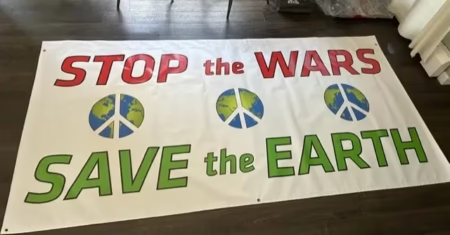
Included are links to COP31 from the past week. Note that on Democracy Now! you will find more links over the week. If ever there were a need to “Steal this Story” it is the sadness and yet the determination, voices and spirit of those worldwide who understand about the dangers of fossil fuel/CO2 and methane and are fiercely refusing to give up.
Meanhile Xi, Putin and Trump met (the timing clearly on purpose during COP31) and drafted a statement that was not about world peace as it should have been; Trump’s major contribution was to again push fossil fuel as he ignores the travesty of the U.S. military in being the greatest source of CO2 along with methane gas because it is making billions money for the gas and oil industry and at minimum millions for the weapons and war industry, and with money going into the coffers of those invested in fossil fuel like Trump and Co. 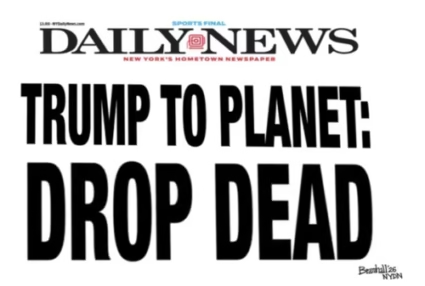 They want to believe Trump when he says the Climate Crisis is a hoax, although some know better, so they can continue making money. This group includes some members of Congress. It also is the reason why they just can’t end a very unpopular war with Iran in cahoots with Israel. That would stop the flow of money to already wealthy corporations and elite ruler bullies is the simplist way to put it. The People are paying. In the meantime billions of dollars are being wasted on the perpetuation of the Iraq war over fossil fuel, money that should be used to stop fossil fuel and end or at minimum control the climate crisis and save the planet.
 Story Nov 23, 2026
“A Shameful Failure”: U.N. Climate Summit Collapses as Final Text Drops Mention of Fossil Fuels
Introduction
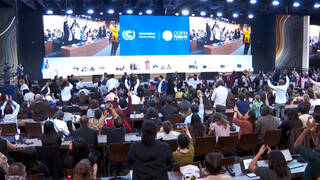
The United Nations climate summit in Turkey, known as COP31, collapsed on Sunday after nations failed to reach an agreement on a new climate deal. A number of countries opposed the final draft because it made no mention of fossil fuels. Many poorer countries also objected to the lack of financial commitments from richer nations to assist them in adapting to the climate crisis.
“This is not about the Global South begging for assistance and help,” says Filipino climate activist Lidy Nacpil. “The principle is that [wealthy nations] have created this problem, and they have to contribute to the solutions.”
“What we’ve seen over the past decades is the Global North are not delivering on any of their responsibilities,” says Brandon Wu, director of policy and campaigns at ActionAid USA. “That’s what’s causing the deadlock. It’s not new to this COP, but it’s becoming increasingly untenable.”
We also speak with two other leading climate justice advocates who attended COP31, Tasneem Essop of Climate Action Network International and Kathy Jetn̄il-Kijiner, climate envoy of the Marshall Islands.
TRANSCRIPT
AMY GOODMAN: This is Democracy Now!, democracynow.org, The War and Peace Report. I’m Amy Goodman, back in New York.
In Turkey, the United Nations climate summit collapsed Sunday after nations failed to reach an agreement on a new climate deal as the Earth warms. The European Union and a number of countries opposed the final draft because it made no mention of fossil fuels. The effort to strip the text of references to coal, oil and gas was led by Saudi Arabia and joined by Russia. The United States did not participate in COP31.
This is Kathy Jetn̄il-Kijiner, the climate envoy for the Marshall Islands.
KATHY JETN̄IL-KIJINER: The Republic of the Marshall Islands objects to the adoption of the CMA text and cannot join consensus. We came to Antalya to honor our commitment to the Paris Agreement and to do what we promised our people back home. We face an inevitable overshoot of 1.5. We came here expecting the world to deliver a comprehensive and urgent response on reducing emissions, on protecting our people and on providing the finance to do this. We have been let down on all sides. We were presented with the worst possible response to overshoot: a response to enhance oil and gas. We will not be forced to accept false solutions. We will not compromise our future to benefit fossil fuel interests. We will not accept an outcome that undermines our security and threatens our future.
AMY GOODMAN: Ireland’s Climate Minister Darragh O’Brien outlined the European Union’s opposition to the final text.
DARRAGH O’BRIEN: At a point where the world urgently needs action to avert disastrous levels of global warming, the draft cover decision falls well short. We will not endorse a decision that does not respond to the science, that disregards the implementation gap, and that actually risks deepening the chasm between global commitments and the action required to correct the overshoot and bring 1.5 degrees back to within reach. We will not endorse a cover decision or an Antalya pact that does not even mention fossil fuels, which is the key driver of climate change. And we will not accept negotiating backward in time. And we will not accept a COP that greenwashes fossil fuel.
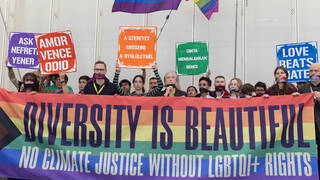
AMY GOODMAN: Over the weekend, climate justice activists rallied against the final text. On Friday, a Malaysian climate activist, Amalen Sathananthar, was detained after interrupting the closing plenary. He stood on a table holding a red noose around his neck and wearing a shirt that read, “You are killing the future.”
AMALEN SATHANANTHAR: You are killing the future! You are killing the future! Why don’t you just kill me now? The climate crisis is killing! … There’s no money! Just kill me now! The Global South can’t wait! The Global South can’t wait for this! And yet you just keep doing nothing, nothing at all! Racists! Kill me now! Kill me now! Kill me now! Kill me now! … You are killing the future! You are killing the future! You are killing the future! You are killing the future!
AMY GOODMAN: We are joined now by three leading climate justice activists who just returned to their home countries after attending the U.N. climate summit. Brandon Wu is with us from Washington, D.C., director of policy and campaigns at ActionAid USA. In Manila, Lidy Nacpil is with us, the longtime Filipina climate activist and coordinator with the Asian Peoples’ Movement on Debt and Development. And from Cape Town, South Africa, we’re joined by Tasneem Essop, executive director of the Climate Action Network International.
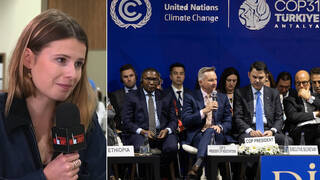
I want to begin with Tasneem, but first let’s play a short video from Turkey of Tasneem Essop trying to interact with Chris Bowen, the COP31 president of negotiations from Australia.
TASNEEM ESSOP: You have an opportunity to save this process. We need decisions that will protect the people of the South. There’s nothing in the text, and corporate interests will be the only ones that benefit. CCUS, carbon dioxide removals are dangerous, dangerous, opens the door for fossil fuels. Please read the letter.
CHRIS BOWEN: I will.
TASNEEM ESSOP: The Global South demands the protection of its people.
AMY GOODMAN: “The Global South demands the protection of its people,” Tasneem Essop said, executive director of the Climate Action Network International, joining us from Cape Town, South Africa.
Tasneem, you must be extremely tired at this point. I just saw you in Antalya, Turkey, and now you’re back home in Cape Town, South Africa. Can you respond to the collapse of the talks, as you tried to question the president of the COP, the Australian Climate Minister Chris Bowen?
TASNEEM ESSOP: Thanks, Amy. Yeah, a bit tired from the COP itself, but also, in a sense, very disappointed that it had to come to this.
I wouldn’t characterize the COP as having collapsed. I think it’s important for your viewers to understand that there were two processes, actually, at this COP. The one was the formal negotiation process, and that is where the negotiations on different tracks — on the just transition, on adaptation, on mitigation, on climate finance — was taking place. And then there was the cover decision.
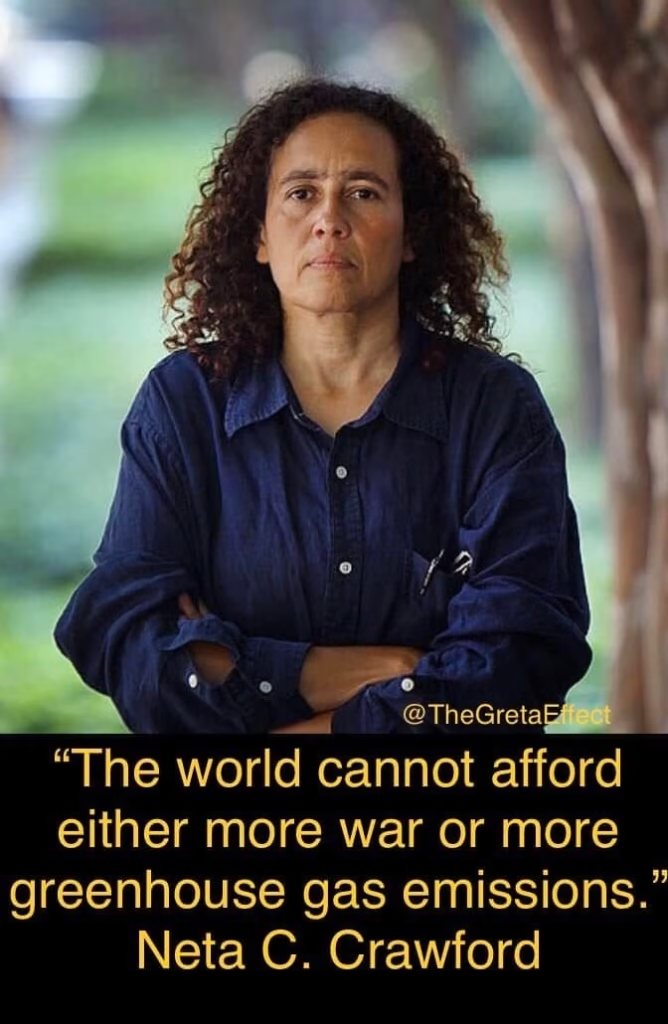 The cover decision was a decision by the COP presidencies, in fact, driven by the COP president for negotiations, Australia, as a way of including political statements, if I can call it that. And it’s really that where there was no agreement reached. The others had — you know, they were largely procedural. They had passed through. There was one or two where there were objections, like the mitigation work program track. But certainly, it was the cover decision that caused the most controversy.
Presidencies do not need to have cover decisions. We were concerned about this cover decision from the start, when they announced this at the pre-COP. And so, we saw that, in fact, this cover decision distracted the entire negotiations. All of the political attention that was needed in the formal negotiations got taken out and into the cover decision negotiations and discussions. So, that is where things collapsed, if you might call it that. It’s disappointing that it had to come.
I think the biggest lesson here is cover decisions just do not work. We need to pay attention and focus on the mandated negotiations. And that is where developed countries, actually, the ones that, you know, had the theater around rejecting a cover decision — that’s where they actually gutted the negotiations. That’s where — and it’s hidden — where the problems arose. The finance for adaptation track didn’t move forward. They kept on resisting the delivery plan for a commitment they made on tripling finance for adaptation. The just transition track didn’t move, because they obstructed the creation of a just transition mechanism.
And so, if you go through all of the formal negotiation tracks, it was developed countries that actually blocked and obstructed, and then came to the cover decision and, you know, decided that they’re going to reject it, and pretended to be the champions, when, in fact, the real negotiations were happening elsewhere, and they actually obstructed this.
AMY GOODMAN: I want to bring Brandon Wu into the conversation, of ActionAid USA. He also just returned from the U.N. climate summit. If you can give your analysis of what took place? A lot of people are saying COP31 collapses as EU rejects texts for being weak on fossil fuels. But when we were at the U.N. climate summit, we were speaking to many, including a young European activist who was saying, in fact, to their shock, the European Union replaced President Trump, who had pulled the U.S. out, in pushing for fossil fuels at the U.N. climate summit. What happened?
BRANDON WU: So, I think this has become the headline. I mean, you read these headlines at the top of the show, right? The COP collapses, and it’s because — and the EU is rejecting the text because of lack of fossil fuels. And I do think that that is actually a dangerous and deeply misleading story, because, as Tasneem said, the EU, you know, try to style themselves as the climate champions: “This is not enough ambition. We need more movement on phasing out fossil fuels,” which, of course, we do. We need more movement on fossil — on phasing out fossil fuels. And it’s got to start in the Global North.
The EU are being quite hypocritical, actually. Their transition plans away from fossil fuels are not at all aligned with the 1.5 degrees Celsius climate target that they claim to be defending so much. And the way these negotiations are structured, the Global North has the responsibility to reduce its emissions first and fastest, and also the responsibility to provide money and support to the Global South, so that the transition can be enabled in those poorer countries.
And what we saw is that the developed countries, across the board, acted more like bullies than champions. They come in demanding more of the Global South, but in every negotiating room blocking any progress on the finance that is going to make that transition possible.
And one thing, like two weeks before the negotiations started, the EU climate commissioner actually said any new climate finance commitments were, quote, “dead in the water.” “Dead in the water.” He actually said that. This was two months after the floods in Nepal that killed 1,500 people, with five over 5,000 people still missing. “Dead in the water.” It was shockingly tasteless and also a shocking way to approach the negotiations. They said out loud two weeks before the negotiations that they were coming in with nothing to offer, with no room for compromise on the one thing that is the major priority for the Global South countries in these negotiations.
AMY GOODMAN: So, talk about what this means. What does it mean for the COP, for the conference of the parties, COP31, the longest, the largest, to collapse? And while I think up to 100,000 people participated, would you also say it’s one of the largest gatherings of fossil fuel lobbyists in the world?
BRANDON WU: So, yes, there are a lot of fossil fuel lobbyists that come up into these spaces. There are a lot of lobbyists for data centers, for, you know, Big Tech, all these things. It’s not a clean space, right? And the reason we have so many intransigent governments is because there’s so many profit-seeking interests that have their ear.
The way forward — I mean, as Tasneem said, the actual negotiations did not fully collapse. There were decisions that moved forward some key things on just transition, which is, you know, making sure communities are supported as we change our economies to more sustainable ones, on finance, on adaptation. Those tracks are not dead. We didn’t get anything we wanted, but it was only the cover decision that was fully rejected.
And so we live to fight another day, but we’re going to face the same problem over and over again. This has been happening for decades, right? The way that these negotiations are structured is the Global North, as I said, has to lead, on cutting emissions, on providing finance. They have the legal obligation to do that. They have the money to do that. We see how the U.S. is throwing trillions of dollars a year for genocide and war. The money is there. They need to provide it to the Global South to make the transition happen, and then the Global South can reduce emissions, their dependence on fossil fuels. And what we’ve seen over the past decades is the Global North are not delivering on any of their responsibilities. That’s what’s causing the deadlock. It’s not new to this COP, but it’s becoming increasingly untenable.
AMY GOODMAN: And, I mean, I think part of the problem, being at the COP for this past week, is the level of jargon that most people just don’t have access to — “adaptation,” “mitigation,” “climate finance.” These may sound obvious to you. The cover decision and the cover letter, explain exactly what you mean.
BRANDON WU: Look, at the end of the day, this is a question of fairness. There are basic principles of fairness, that everyone understands, that are just being blown out of the water in this process. The rich developed countries — the U.S., EU, Australia, Japan, Canada — these are the countries that spewed greenhouse gases into the atmosphere over the last 150, 200 years, and have built their economies on the backs of fossil fuels. These are the countries that created the mess, and these are the countries that have to clean it up.
“Climate finance” is just a fancy term for sending money to poorer countries so that they can make the transition, as well, so that they can help their communities survive in a world in which, you know, we’re breaching the 1.5-degree limit. That’s another piece of jargon, but what that means, of course, is that climate impacts are getting worse. We all know this. They’re getting worse. They’re going to get much worse, much faster, I think. And countries need the support to deal with that. These are countries that have had nothing to do with the problem, and it’s their people whose lives are at stake. They’re basic principles of fairness. I think everybody can understand that.
AMY GOODMAN: And the cover decision?
BRANDON WU: So, the cover decision, I mean, the reason that that’s important is because the rich countries are using what happened with the cover decision as a way to deflect blame. So, they are pointing at —
AMY GOODMAN: And “cover decision” means?
BRANDON WU: So, the cover decision, again, it was a political text, that came out of nowhere. The presidency of the COP wrote it, so Türkiye and Australia. It was not part of the formal negotiating tracks, where you have all the different country blocs talking about issues of substance that they’ve decided should formally be on the agenda for the negotiations. So, it’s a political text that was written by the presidency, and then they tried to, in a top-down way, get buy-in from all the countries so they could include all their little pet projects and all the pet projects of the countries that had their ear.
AMY GOODMAN: I want to bring Lidy Nacpil into this conversation. Lidy Nacpil is a Filipina climate activist, coordinator with the Asian Peoples’ Movement on Debt and Development, with the Global Campaign to Demand Climate Justice. Lidy, thanks so much for being with us. You’re joining us, I believe, from Manila. Can you respond to what has taken place? You know, for so many COPs, so many of these U.N. climate summits, in the midst of them, the Philippines is hit with tsunamis, with hurricanes. I think of how many times Yeb Saño, first as a chief climate negotiator for the Philippines, now, as he’s described, as a climate pilgrim, but then he would stand up and talk about how the Philippines was being ravaged by the climate crisis. What this means for the Philippines, and what you think needs to happen now, Lidy?
LIDY NACPIL: Well, first of all, our reaction to COP31 is also amidst the backdrop of the UNEP report saying that the breach of 1.5 degrees is imminent and unavoidable. So we thought that this would at least imbue a sense of urgency for this COP to deliver very concrete and actionable agreements that will actually mean progress in the real world and not just in text language. So, of course, we are so deeply disappointed and enraged that we have not made this progress, and, in fact, backtracked on a number of things. There are, of course, some important gains we have made in terms of securing at least some meager progress on certain things. Tasneem has mentioned, for instance, other negotiating tracks. But this is not what — the progress we needed at this point. We need much, much more.
And in terms of the climate finance that we’re discussing here, I’d like to really make it clear: This is not about the Global South begging for assistance and help. And this is one of the worst things that happen at COPs. They make us feel like, OK, here we come again with our finance demands. But this is a matter of principle, as well as practicality. The principle is that they have created this problem, and they have to contribute to the solutions, including that of providing climate finance as part of the reparations for all the harm that has been caused. And the practicality is that we cannot fully transition away from fossil fuels, which we want to do. We will be one of the first people to be — to want to do that, because the impacts on us are huge and horrifying. But this is not simply possible to succeed in completing that transition if that climate finance is not delivered.
And this is a fact that they continuously leave out in their stories. And when I say “they” here, it’s the Global North. The EU, for instance, we were very appalled that they were, as Brandon said, hypocritically saying they’re going to reject the cover decision because there’s no mention of fossil fuel transition, but they leave out the fact that this is not going to happen unless they deliver on their climate finance, which they have successfully obstructed in all the negotiation tracks, any discussion on finance.
So, this leaves the Global South in a situation where we realize it’s — we really need to fight harder and build our power, because no way are these countries going to, or these governments, are going to negotiate it on the basis — negotiate on the basis of good faith, of good intention for the whole of humanity.
And by the way, it is not just for our sake that we need to complete that transition in our countries for which we need the climate finance. It’s for the entire world’s sake. We’re not going to succeed in solving the climate problem with just actions in the Global North. We know that. We need to act in the Global South, but we need to do more than our fair share. And for that to happen, we definitely need that climate finance.
So, we’re not here to beg. We are here to insist on what is owed us and to insist on what success for the whole of humanity, for the whole of the planet, what success requires.
AMY GOODMAN: I want to bring in Kathy Jetn̄il-Kijiner. We’ve just spoken with three well-known activists who have attended so many of the climate summits, from the Philippines, from South Africa, from the United States. Kathy Jetn̄il-Kijiner is also an activist, but now the climate envoy, one of the delegates, the climate envoy for the Marshall Islands. We just played a clip of you speaking. And I wanted to ask you: What was it like from the inside? And how does climate change affect the Marshall Islands, even where they are?
KATHY JETN̄IL-KIJINER: Yeah. Thank you, Amy. I’m so glad to be here, and I’m glad you were able to catch me, actually.
But I would just say that in the — it was incredibly long hours of negotiations. I mean, I didn’t sleep that whole night. I got there to swap out my minister at 7 p.m., and then I was there until we delivered our statement. And so, we were negotiating at 3:00 in the morning, at 1:00 in the morning, and then again at 5:00 in the morning. And it was long hours of discussions between ourselves, our allies within the Pacific Small Island Developing States, within the Alliance of Small Island Developing States, and, of course, other countries, too. And we were really trying to figure out how do we make our way forward and whether or not we needed to sign on to the cover decision or not sign on to the cover decision. So, it was not an easy decision at all.
But I think, ultimately, for us, this deal did not provide on fossil fuel transition that we needed. It did not have the ambition on finance, on adaptation finance. It did not have enough strong language on the ICJ. It did not recognize how incredibly monumental the ICJ was, especially for those of us in the Pacific. And then, of course, it did not have enough on any of the other components that were so important to us, on IPCC.
And so, I think, ultimately, we did decide that we needed to not sign on to the cover decision. It is the first time that Marshall Islands did that, and we did not come to that decision lightly. But I think that I stand by it, you know, and I think that it was the right call to make. I think that the two COP presidencies had an incredibly difficult task of, first of all, working together, but also working with multiple different countries and all the different priorities. But I think the biggest thing of all was that we could not sign on to a decision that had to do with CCUS, the carbon capture, utilization, storage. We did not want this COP to be a CCUS. And, of course, I think also —
AMY GOODMAN: Kathy, if you could explain what CCUS is, what these options are that are being talked about?
KATHY JETN̄IL-KIJINER: Yeah. So, I’m not a climate scientist, so I’ll just say that CCUS is actually a way to capture carbon that actually utilizes fossil fuels. So, it basically would have opened up the way for more fossil fuel usage. And ultimately, we as the Marshall Islands could not agree to a deal that would actually open the path for further fossil fuel usage and actually make the environment worse. So, that was part of the reason why we didn’t sign on.
But it was also because there was extremely weak language on adaptation finance. So, I think that’s really important, because I think what’s coming away is that a lot of countries are saying, “They walked away only because it did not have transition away from fossil fuels.” Yes, definitely, so important, and also it did not have enough on adaptation finance. Countries like mine need both. We cannot survive the climate crisis without the transition away from fossil fuels and without the needed adaptation finance for developing countries, that we’re duly owed.
You know, the Marshall Islands is only two meters above sea level. We are dealing with massive impacts from climate, from climate change, including the worst drought in El Niño, super El Niño that’s about to hit us. And then we’re looking at adaptation at such a large scale, changing the landscape of our islands, that would cost tens of billions of dollars just for two of our urban centers. And we did not cause this problem. So, of course, we are owed that finance. So, I think that’s really important to come away with, too, is that we were betrayed on two fronts: on the transition away from fossil fuels and on adaptation finance.
AMY GOODMAN: I just have to quickly ask: You are — there’s something oddly appropriate about you — I don’t think you’re in your closet. I think you’re in some kind of store. But there are pocket books everywhere, which suggest money. And maybe that’s the most appropriate way to understand what took place.
KATHY JETN̄IL-KIJINER: Yes, yeah. You caught me on my day off right after, and so I’m out actually doing a little bit of sightseeing in Antalya.
AMY GOODMAN: Amazing. I wanted to end back with Brandon Wu. You’ve returned to the United States. President Trump just had his trilateral summit, or, I should say, photograph, with President Xi of China and President Putin of Russia. And one of the deals in their so-called peace declaration was increasing the production of fossil fuels. If you can talk about what it means to come back to the historically largest emitter of carbon, of carbon pollutants in the world, after Trump just met with now the current largest producer of carbon pollutants in the world, China, and their resolution to increase oil, gas production?
BRANDON WU: Yeah, I want to say two things about that. Excuse me. First, the U.S. is actually the country with the largest oil and gas expansion plans of any country in the world. And so, if we want to point a finger at anybody, it should be our own country, you know, and, of course, in addition to being the largest historical polluter.
The second thing is that, you know, I think what this really shows is it actually comes back to the importance of a multilateral democratic process like the COPs. You know, we come away from these COPs every year saying, “Well, that was a disaster.” And then, of course, so we always ask ourselves, “What’s the point? Why are we still fighting in these places that are dominated by countries in the Global North that don’t want to do anything, that have fossil fuel lobbyists roaming the hallways? Like, why are we here? What are we accomplishing?” And I think that trilateral summit really shows us kind of what the alternative is. Right? It is a world that is dominated by autocrats, or wannabe autocrats, and strongmen, who have very little accountability. And that is what we’re up against, right? And the UNFCCC and the U.N. spaces, in general, provide an alternative to that, where everybody, at least in theory, formally has a voice, and we, as civil society, have a space to input and to protest and to advocate.
And we have to preserve that. It’s not delivering the results that we need so far, and we know why. It’s because of the intransigence of many countries, where, as Lidy said, we need to be building power. We need to be pushing these governments to do better. Certainly in the U.S., we need to be doing that. And hopefully, we’ll have that opportunity in the very near future. But, yeah, I think the alternative to these multilateral spaces are places where we have even less power, even less of a say, and have even less of an opportunity to hold leaders accountable.
AMY GOODMAN: Brandan Wu, director of policy and campaigns at ActionAid USA; Kathy Jetn̄il-Kijiner, climate envoy for the Marshall Islands; Tasneem Essop, executive director of the Climate Action Network International, speaking to us from Cape Town, South Africa; Lidy Nacpil, coordinator with the Asian Peoples’ Movement on Debt and development, speaking to us from the Philippines. We want to thank you all for being with us.
Coming up, as Democrats flip another House seat in North Carolina, we speak to Bishop William Barber. He’s calling for the Third Reconstruction. What does that mean? What is he calling on Democrats to do, who now have the largest majority in the House of Representatives in 30 years? Stay with us.
[break]
AMY GOODMAN: “Fenfo,” “Something to Say,” by the Malian singer Fatoumata Diawara, performing in our Democracy Now! studio in 2018.
People’s Climate March: Thousands Demonstrate in Turkey as Country Hosts COP31 U.N. Summit (the opening, Nov. 16. 2026)
Story Nov 20, 2026


Story Nov 18, 2026
“Shameful”: Fossil Fuel Industry Blocks U.N. Climate Action as Global Warming Reaches 1.5°C